How Spectrometer Technology Reshapes Modern Foundry Production and Quality Control
The global foundry industry is undergoing a major shift from experience-based manufacturing to data-driven intelligent production. As a core precision testing device, the spectrometer has become an essential piece of equipment for modern foundry quality control and process optimization. Traditional casting quality inspection relies on manual evaluation and slow chemical laboratory analysis, which cannot keep pace with fast furnace melting and mass casting production. Today, high-precision spectrometers, including Optical Emission Spectrometers (OES) and portable XRF spectrometers, support full-element material analysis within seconds. Professional spectrometry detection effectively stabilizes molten metal composition, reduces casting defects, and promotes overall process upgrading for foundry factories.
Why Spectrometer Testing Matters for Foundry Quality Control
Casting mechanical performance, structural stability, and service life are highly dependent on chemical composition consistency. This makes spectrometer elemental testing the foundation of standardized foundry production. Industrial spectrometry covers all key elements involved in casting manufacturing: major base elements (Carbon, Silicon, Manganese, Sulfur, Phosphorus), alloying elements (Magnesium, Chromium, Nickel, Molybdenum), and harmful trace impurities (Lead, Tin, Antimony, Bismuth). Real-time spectrometer data helps manufacturers avoid common defects such as porosity, shrinkage, cracking, and poor graphite spheroidization caused by unbalanced element proportions.
Conventional wet chemistry testing requires long processing times and fails to deliver real-time furnace data, often leading to unstable molten metal composition, inconsistent batch quality, and high scrap rates. In comparison, modern spectrometer systems provide accurate full-spectrum elemental analysis in real time during melting. Fast spectrometry feedback allows operators to adjust alloy ratios immediately, eliminating the data lag of traditional inspection methods and enabling reliable, repeatable foundry production.
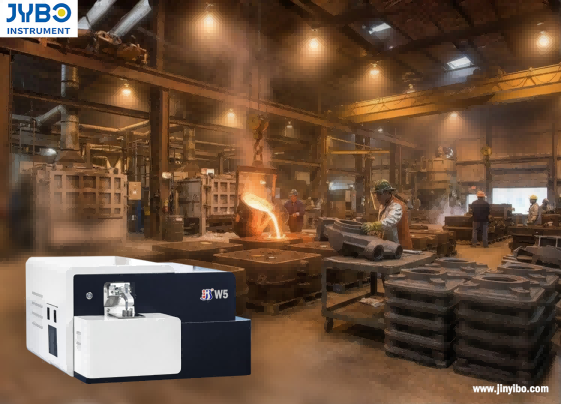
Full-Life Cycle Spectrometer Application in Foundry Production
Spectrometer technology covers the entire foundry production workflow, forming a closed-loop quality assurance system. Comprehensive spectrometry monitoring includes incoming raw material inspection, in-furnace melting supervision, pre-pouring composition confirmation, finished casting verification, and quality defect traceability. This full-process coverage ensures every production step is guided by accurate spectral data.
1. Raw Material Inspection & Impurity Control
Spectrometers serve as the first quality barrier for foundry raw materials. Foundries widely usespectrometer screening to test pig iron, scrap steel, recycled gating materials, and ferroalloy additives. High-sensitivity spectrometry accurately detects excessive trace harmful elements before feeding. This strict pre-furnace inspection prevents impurity accumulation, avoids casting embrittlement and graphite distortion, and guarantees stable raw material purity for long-term production.
2. Furnace Front Melting & Alloy Adjustment
Furnace front monitoring is the most valuable application of spectrometer technology in foundries. During melting, on-site sampling and rapid spectrometry analysis provide precise elemental data. Operators adjust carbon raisers, silicon-manganese alloys, and modifier dosages strictly based onspectrometer test results instead of empirical judgment. For ductile iron production, spectrometers accurately monitor residual magnesium and cerium to guarantee qualified spheroidization and inoculation effects. For carbon steel, alloy steel, cast aluminum, and cast copper, professional spectrometry controls sulfur and phosphorus content to reduce hot brittleness, cold brittleness, and casting cracking risks.
3. Pre-Pouring Composition Verification
Final spectrometer composition verification before pouring is critical to avoid full-batch scrap. Only molten metal with qualified spectrometry reports can proceed to pouring procedures, effectively preventing massive economic losses from unqualified material components. Meanwhile, the ultra-fast testing speed of spectrometers shortens production waiting time, improves furnace turnover efficiency, and increases overall foundry output.
4. Recycled Material Stable Management
Recycled casting materials effectively reduce production costs, but repeated recycling easily causes harmful element enrichment. Regularspectrometer testing helps foundries dynamically track elemental changes in recycled materials. With reliable spectrometry data, manufacturers can formulate scientific recycling ratios, suppress element accumulation, and maintain consistent quality for recycled material casting batches.
5. Finished Product Testing & Grade Sorting
Spectrometers provide authoritative composition inspection for finished castings. High-precision spectrometry verifies whether casting body components meet standard grade requirements. Multi-point spectrometer detection analyzes internal element segregation, offering data support for optimizing pouring temperature, gating system design, and cooling parameters. In addition, portable spectrometers support on-site rapid grade sorting, effectively preventing mixed-grade delivery errors.
Spectrometer Data Supports Quality Traceability & Process Optimization
When castings suffer from fracture, leakage, or unqualified mechanical properties, spectrometer elemental analysis serves as the core traceability basis. By comparing standard spectral benchmarks with defective product spectrometry data, engineers quickly locate root causes including raw material impurities, improper melting parameters, and inaccurate alloy batching. This data-driven troubleshooting mode enables continuous process improvement and stable quality iteration.
Furthermore, high-precision spectrometer detection accelerates new product R&D for high-performance castings. R&D teams rely on accurate spectrometry data to optimize element ratio formulas, develop new alloy grades, and improve the mechanical performance and market competitiveness of customized casting products.
OES vs XRF Spectrometer: Dual Solutions for Foundry QC
Two mainstream spectrometer types dominate modern foundry quality control with complementary advantages. OES spectrometers deliver ultra-high precision for furnace front analysis and laboratory component verification, ideal for strict batch production standards. Portable XRF spectrometers support fast, non-destructive on-site screening and large workpiece sorting. The combined application of the two spectrometry solutions fully adapts to the quality control demands of small, medium, and large foundry enterprises.
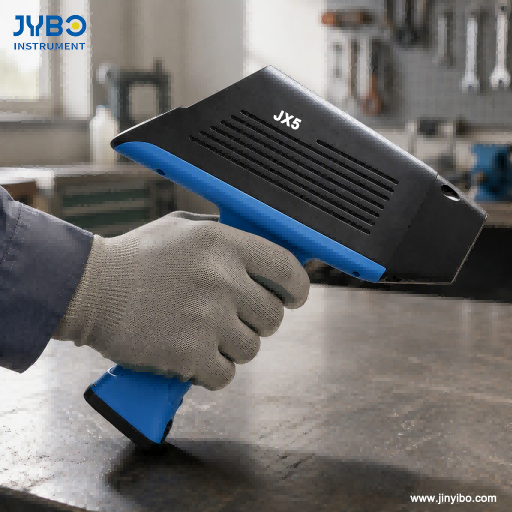
Core Benefits of Spectrometer Technology for Foundries
Practical industrial verification proves that standardized spectrometer detection systems significantly reduce casting defect rates, stabilize melting process parameters, lower raw material waste, and cut production scrap costs. For modern foundries, spectrometry investment brings long-term quality stability and obvious economic benefits.
Future Trend: Spectrometry Becomes Standard for Intelligent Foundries
As downstream industries such as new energy, precision machinery, and aerospace raise higher requirements for casting accuracy and reliability, spectrometer-based quality control is evolving into a mandatory standard for modern foundry manufacturing. Driven by precise spectrometry data, the traditional foundry industry is stepping out of empirical production and moving toward digital, refined, and intelligent high-quality manufacturing.
FAQ
1.What type of spectrometer is best for foundry quality control?
The best spectrometer depends on the specific application requirements. Optical Emission Spectrometers (OES) are widely used for furnace-side analysis and laboratory quality control because they deliver high-precision measurement of critical elements including Carbon, Sulfur, Phosphorus and alloying elements. Note that OES requires physical sampling and sample preparation, which is a destructive test. Portable XRF spectrometers are suitable for rapid, non-destructive material identification, alloy sorting, and on-site inspection of large castings or raw materials. However, portable XRF cannot reliably measure Carbon, Sulfur and Phosphorus, so it cannot replace OES for molten metal furnace-side composition verification. Many modern foundries combine OES and XRF spectrometry to achieve comprehensive quality control from raw material inspection to finished casting verification.
2.How does a spectrometer improve casting quality and reduce production costs?
A spectrometer provides fast and accurate elemental analysis during the foundry production process, allowing operators to adjust molten metal composition before pouring. This helps prevent casting defects directly caused by improper alloy ratios, such as cracking, porosity, and unstable mechanical properties. It should be noted that casting defects may also come from moulding, gating or cooling conditions rather than chemical composition. By reducing material waste, avoiding batch rejection, and improving process consistency, spectrometer-based quality control helps foundries lower production costs and achieve more stable manufacturing performance.
Please contact us for further inquiries or detailed information!
Tel:+86-183-5283 6805
Email:sales@jinyibo.com
Web:www.jinyibo.com