Carbon & Sulfur Analysis for EV Lithium Battery Electrode Materials | JYBO Instrument CS8820T
Overview
JYBO Instrument releases CS8820T high-frequency infrared carbon sulfur analyzer for NCM ternary, LFP and silicon-carbon anode QC. Accurate carbon sulfur measurement supports battery R&D, incoming inspection and mass production consistency.
Lead Paragraph
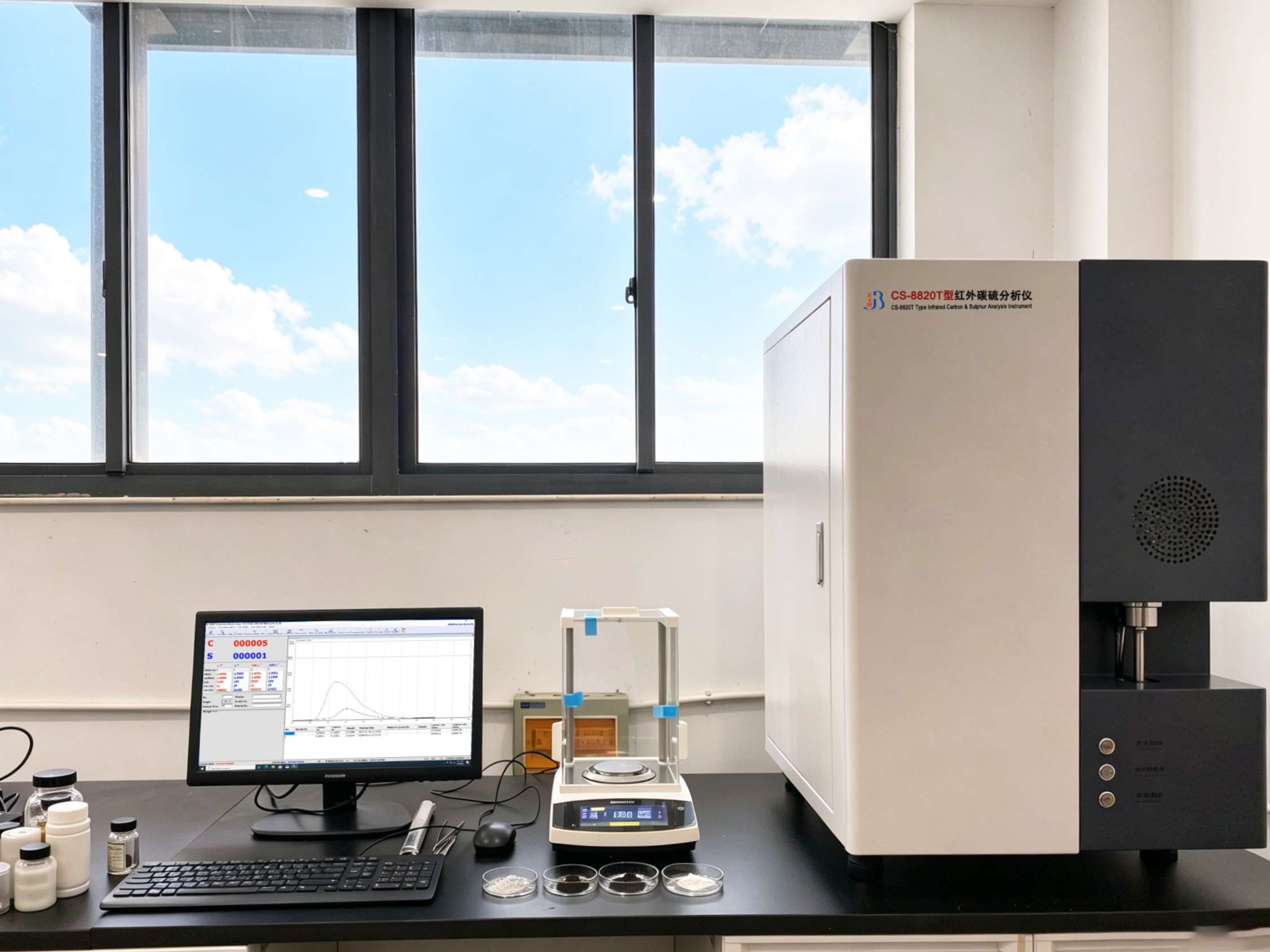
JYBO Instrument has rolled out a dedicated carbon and sulfur analysis workflow powered by the CS8820T high-frequency infrared carbon sulfur analyzer, designed to solve the critical elemental testing requirement for mainstream lithium-ion electrode materials: NCM ternary cathode, lithium iron phosphate (LFP) and silicon-carbon composite anode. Precise carbon and sulfur quantification is a mandatory quality control step to stabilise battery energy density, charging rate, cycle performance and safety, which has become a bottleneck for many battery material R&D and production labs.
Why Carbon & Sulfur Content Defines Lithium Electrode Material Performance
Carbon and sulfur are two key indicators that directly affect the electrochemical behaviour of lithium battery powders.
- Coating carbon builds conductive networks inside cathode and anode particles. Inaccurate carbon dosing causes poor rate performance, high internal resistance and uneven capacity distribution.
- Sulfur is a harmful impurity. Excess sulfur triggers side reactions, accelerates SEI film overgrowth, leads to cell swelling, capacity fade and potential safety risks.
The mainstream lithium electrode routes face different testing challenges:
1. NCM ternary cathode (high‑nickel / cobalt‑free):The industry shifts to high‑nickel and cobalt‑free formulations to lift energy density and cut cobalt cost. Strict carbon-sulfur monitoring ensures batch consistency of precursor and sintered powder.
2. LFP lithium iron phosphate (LiFePO₄):Widely adopted for electric buses and energy storage batteries. Carbon coating uniformity and sulfur impurity control are core process KPIs.
3. Silicon‑carbon anode:Silicon delivers ultra-high theoretical specific capacity, yet severe volume expansion causes pulverization. Silicon-carbon composite is the dominant mass-production route. Carbon content control is essential to balance conductivity and expansion buffering.
Traditional testing methods struggle with repeatability, long analysis cycles or high running cost for these fine battery powders. This creates demand for a stable, low-maintenance carbon-sulfur analyser for at-line and laboratory QC.
JYBO Instrument CS8820T — Carbon Sulfur Analyzer Optimised for Battery Material Testing
The CS8820T high-frequency infrared carbon sulfur analyser is built for solid powder elemental analysis across battery and inorganic material sectors.
Core Performance Features
- Excellent long-term stability, suitable for continuous 24-hour batch testing in lithium battery factories
- Low operating cost and simplified maintenance, reducing laboratory downtime
- High integration design for reliable and stable daily operation
- Flexible, safe and reliable on-site analysis workflow
- Built-in carbon monoxide conversion module to guarantee accurate carbon measurement
- Automatic solenoid valve detection for early fault warning
- Full-scale linear calibration, covering low-level sulfur impurity detection and high-carbon coating measurement
Wider Application Scope
Beyond lithium electrode materials, CS8820T supports graphite, magnetic materials, ceramics, refractories, ore, coke, catalyst, cement and plant samples.
Application Scenarios for Battery Supply Chain
The JYBO CS8820T solution fits three core stages of the lithium battery material value chain:
1. R&D laboratory:Support formulation development of high-nickel, cobalt-free cathode and silicon-carbon anode; compare carbon coating schemes and impurity control results.
2. Incoming quality control:Test raw cathode and anode powder before production to screen out non-compliant batches.
3. Mass production process monitoring:Track fluctuation during sintering, coating and mixing processes to keep electrochemical consistency across finished cells.
4. Failure analysis:Help engineers locate root causes of capacity decay, gas generation and poor rate performance linked to abnormal carbon or sulfur levels.
Expert Quote
“As battery chemistries keep evolving toward high nickel and silicon-carbon anodes, carbon-sulfur testing is no longer an optional lab test. It is a foundational control point to translate material formula into stable, safe cells. The CS8820T is engineered to help battery material labs get repeatable data without heavy maintenance burden.”
— JYBO Instrument Application Engineer
FAQ
Q1: Why must lithium battery electrode materials test carbon and sulfur?
A: Carbon controls the conductive coating and rate capability; sulfur is a harmful impurity that causes side reactions, gas generation and capacity attenuation. Carbon sulfur data is required for R&D, QC and batch release.
Q2: What battery materials can JYBO CS8820T test?
A: It supports NCM ternary cathode, LFP lithium iron phosphate, silicon-carbon anode, graphite anode and other inorganic battery powders.
Q3: What is the main advantage of CS8820T compared with other carbon sulfur analysers?
A: Long-term stability, low OPEX, automatic valve diagnosis, CO conversion function and full-range linear calibration, tailored for continuous battery powder testing.
Q4: Can this analyser be used for production line at-line QC?
A: Yes. It supports flexible on-site analysis, stable batch repeatability and fits both central lab and near-line QC stations.
About JYBO Instrument
JYBO Instrument focuses on analytical instruments for material elemental analysis. The brand provides spectrometers and elemental analysers for metallurgy, battery material, mining and ceramic industries, with dedicated application support for global industrial laboratories and battery supply chain customers.
Please contact us for further inquiries or detailed information!
Tel:+86-183-5283 6805
Email:sales@jinyibo.com
Web:www.jinyibo.com