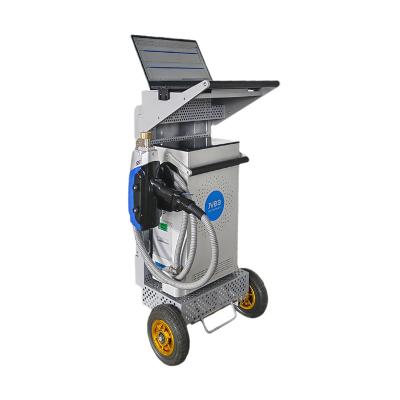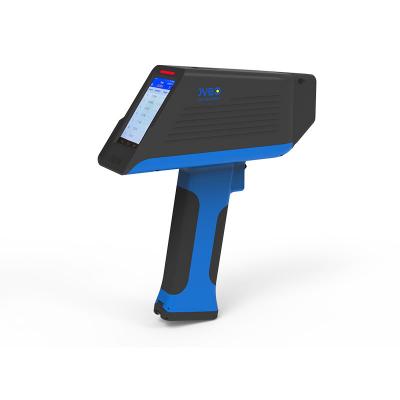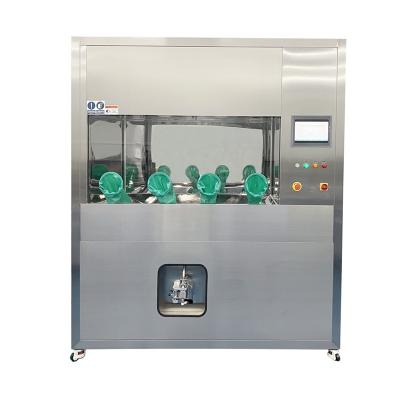

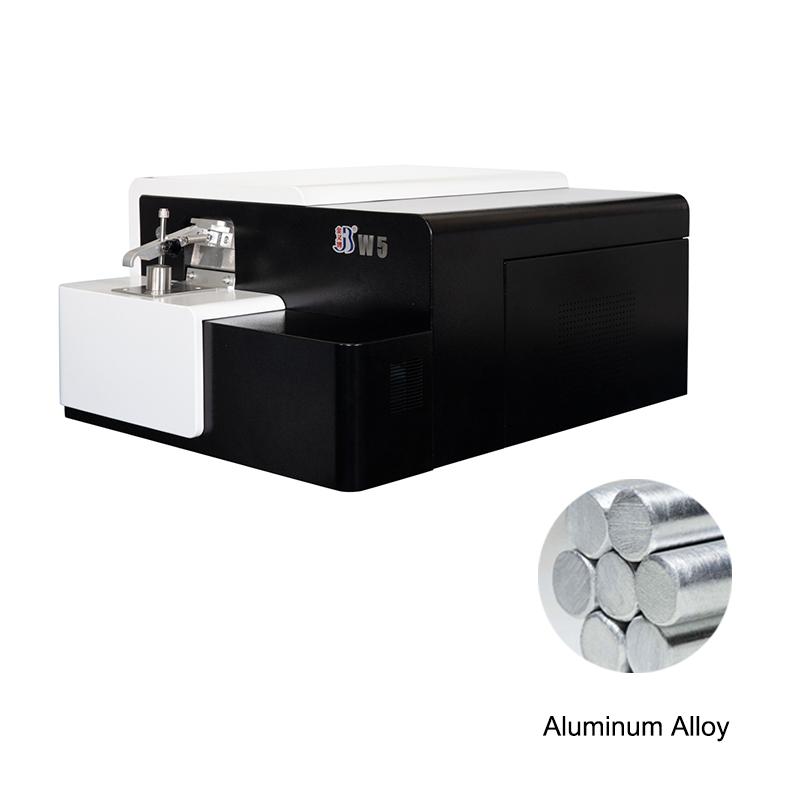
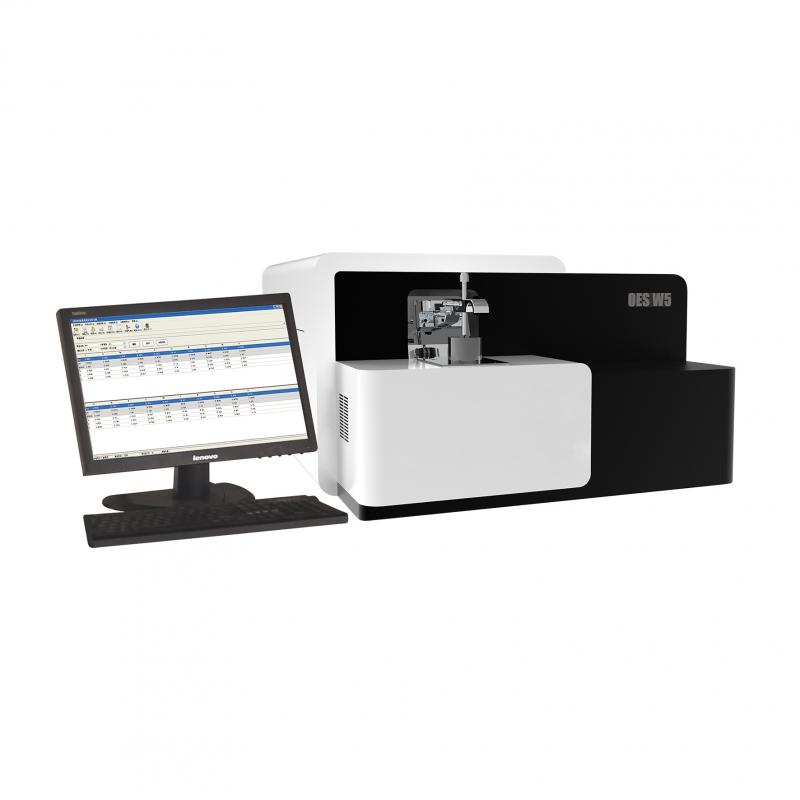
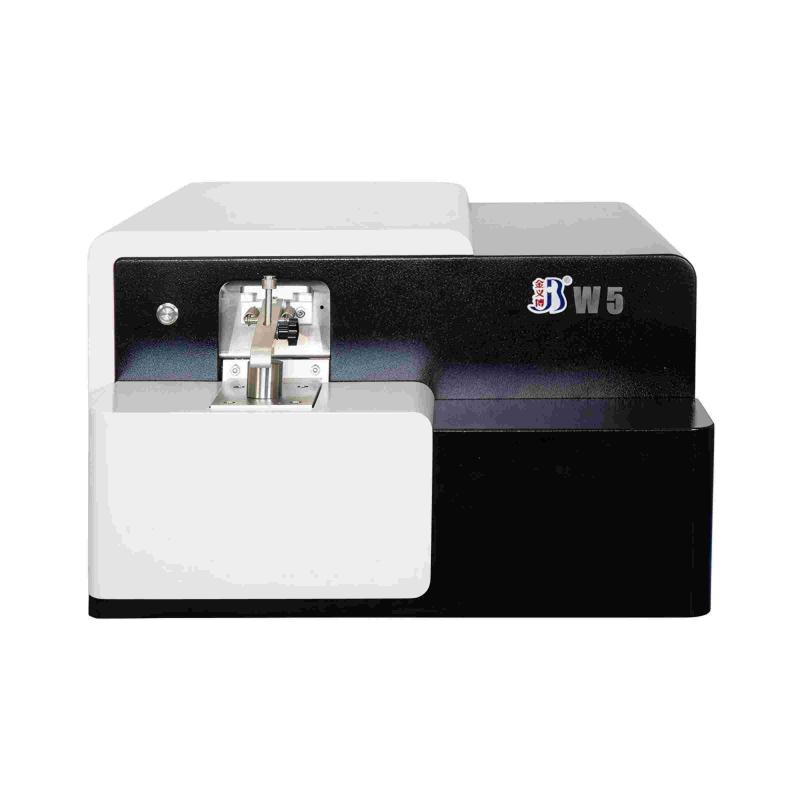
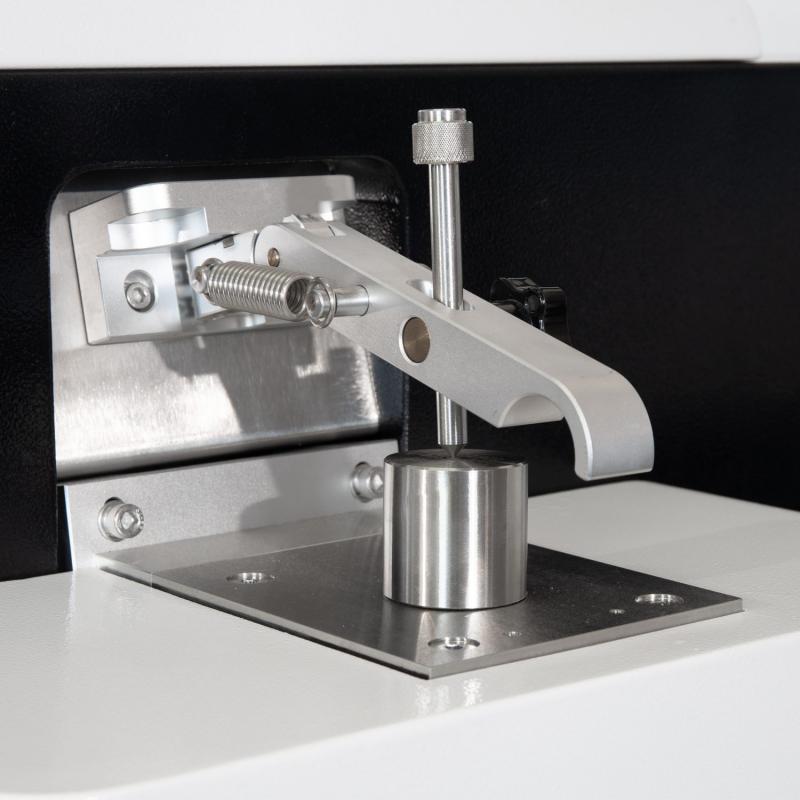
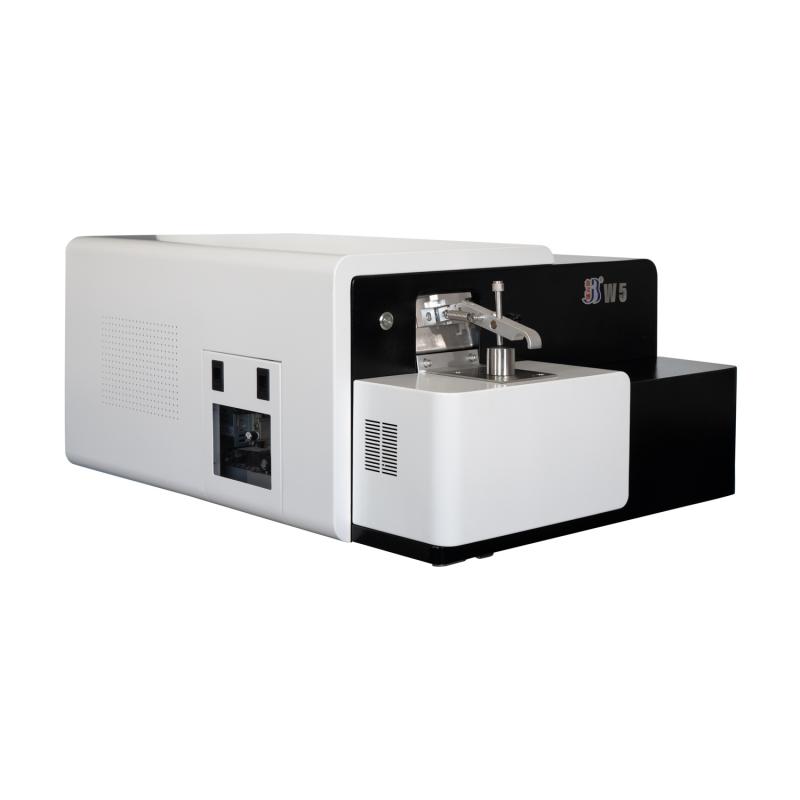
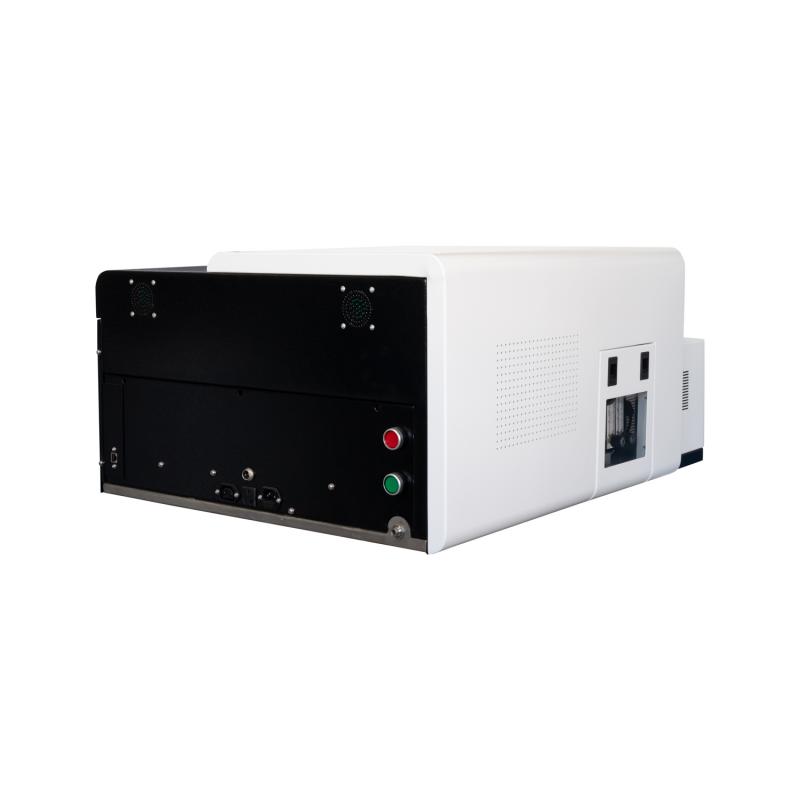
CMOS-based, spark discharge, metal detection
Ultra-low limits of detection
High integration, reliability, stability
Argon jet technology to optimize small sample analysis
Standardized parameter modification
Maximum 30+ elements
High nitrogen (N) analysis 0.03-0.9%
Stable performance for 24/7 industrial operation
Ideal for furnace front QC and material verification
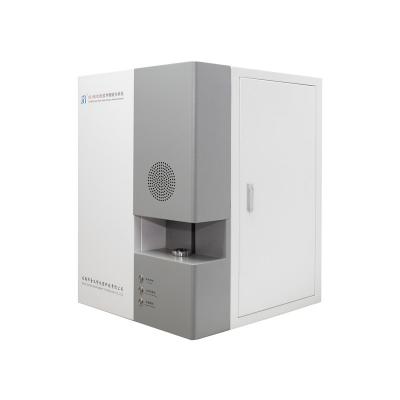
What is Spark OES / Spark Optical Emission Spectrometer ?
Also commonly known as Full-Spectrum OES (Optical Emission Spectrometer), this instrument applies atomic emission spectroscopy technology.
With arc or spark excitation, metal samples generate characteristic spectra. Its full-spectrum detection system collects all wavelength signals simultaneously, then the system automatically calculates and displays the content of various elements.
Featured with fast testing, high accuracy and easy operation, it is widely used in metallurgy, foundry, machinery manufacturing and material inspection.
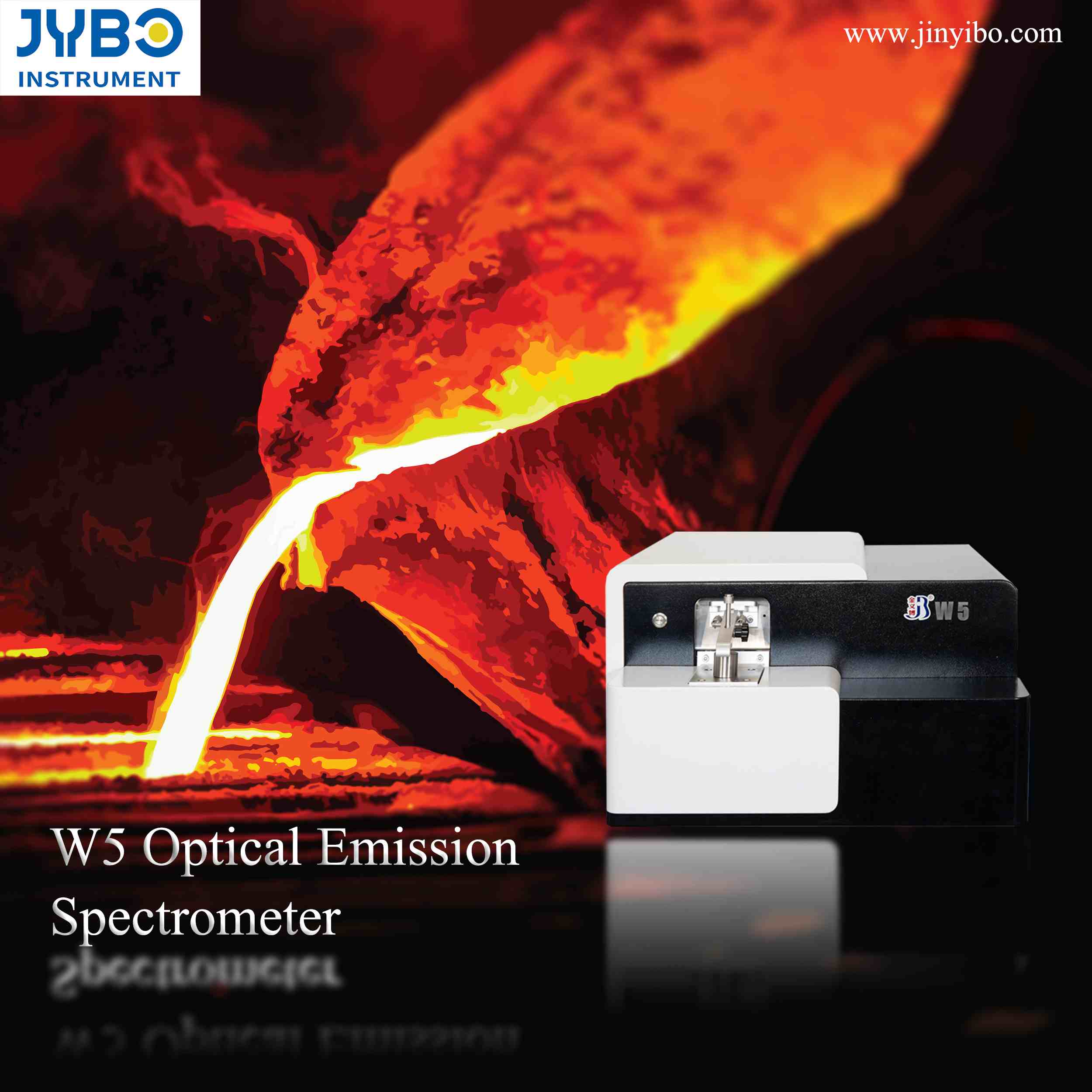
Features of Spark Optical Emission Spectrometer
1.Superior Performance Optical System, Intelligent Digital Spark Source .
2.It can detect elements including that C, P, S, N and it is suitable for a variety of metal base.
3.The design of argon gas circuit is reasonable to make argon washing’s time is shorten when the sample excitation.
4.The rate of analysis is fast, all elements in the channel can be tested within 20s.
5.Solid absorption trap can prevent oil and gas from polluting the light chamber and improve its stability.
6.Standardized parameter modification.
7.Control sample correction function.
8.The core device are all original imported in order to promise the products’ quality.
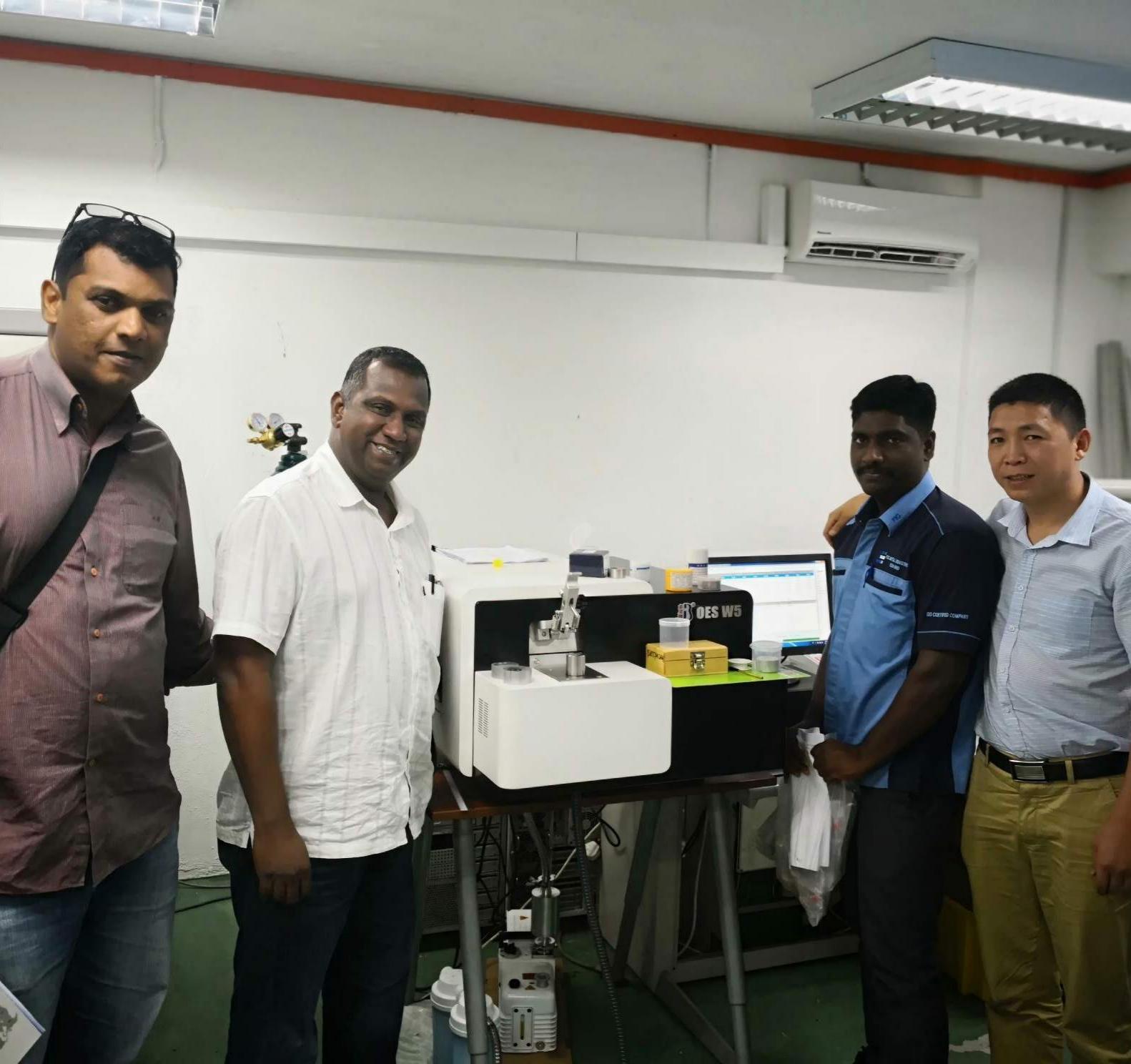
Application of Direct Reading Spectrometer
Raw Material Inspection
Verify the chemical composition of pig iron, alloy additives and metal ingots before production, to block unqualified materials.
Furnace Front Analysis
Quickly test molten metal during smelting. Operators can adjust the ratio timely to keep components within required standards.
Product Quality Check
Accurately test finished castings and workpieces to confirm they meet industry standards and customer requirements.
Alloy Development & Formula Tuning
Support new material research and formula improvement to enhance product performance.
Data Management & Traceability
Automatically record test data and generate reports, facilitating quality audit and product certification.
Parameter:
|
Item |
Index |
|
Optical system |
|
|
Optical structure |
The Paschen Runge construction full vacuum type optics system |
|
Room temperature |
35℃±0.5℃ |
|
Wavelength range |
130-800nm |
|
Focal length |
400mm |
|
Grating line |
2400m1/mm |
|
First order spectral line dispersion rare |
1.2nm/mm |
|
Detector |
Multi block high performance linear CMOS array |
|
Average resolution ratio |
10pm/pixel |
|
Spark table |
|
|
Gas |
Argon gas (99.999%) |
|
Argon flow rate |
When spark: 3-5L/min Standby time: no need for standby traffic |
|
Electrode |
Tungsten electrode technology |
|
Purge |
Automatic purge function |
|
Make up |
Thermal deformation self-compensation design |
|
Analyze the gap |
Sample stage:3.4 mm |
|
Spark source |
|
|
Type |
HEPS |
|
Frequency |
100-1000HZ |
|
Discharge current |
1-400A |
|
Special technology |
Optimization of discharge parameters design |
|
Pre -combustion |
High-energy pre-combustion technology |
|
Processor |
High end ARM, high-speed data synchronization acquisition and processing |
|
Data collection system |
|
|
Interface |
Ethernet data transmission based on DM9000A |
|
Power |
220VAC 50/60Hz(Customized) |
|
Others |
|
|
Base |
Fe, Cu, Al, Ni, Co, Mg, Ti, Zn, Pb, Sn, Ag, Mn, Cr etc |
|
Power consumption |
Maximum:750W standby:40W |
|
Working temperature |
10-35℃(temperature ≥5°C) |
|
Working humidity |
20-85% |
|
Dimension |
860mm(L)*680mm(W)*438mm(H) |
|
Weight |
About 100Kg |
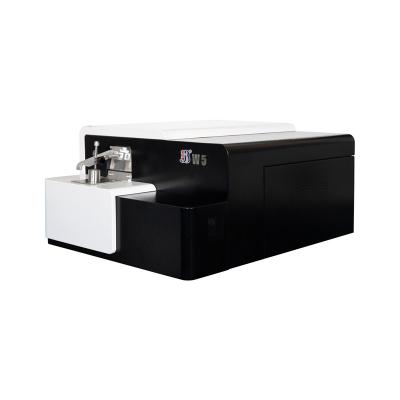
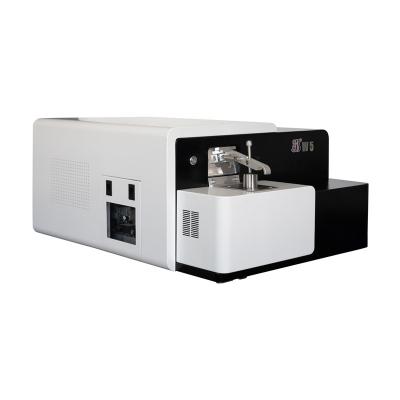
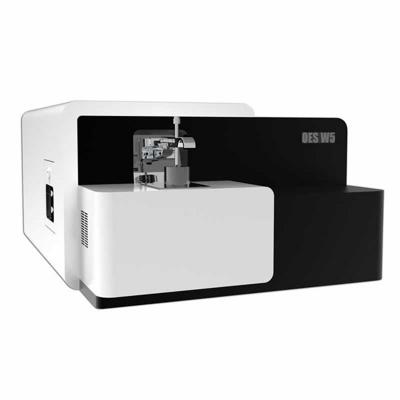
W5 optical emission spectrometer is the most advanced Arc/Spark-OES with Ultimate Performance
The 4th Generation High Performance Metal Analyzer
CMOS-based, spark discharge, metal detection
Ultra-low limits of detection
High integration, reliability, stability
Lowing operating cost and easy maintenance
Vacuum optical chamber and low argon consumption
Argon jet technology to optimize small sample analysis
Standardized parameter modification
Maximum 30+ elements
High nitrogen (N) analysis 0.03-0.9%
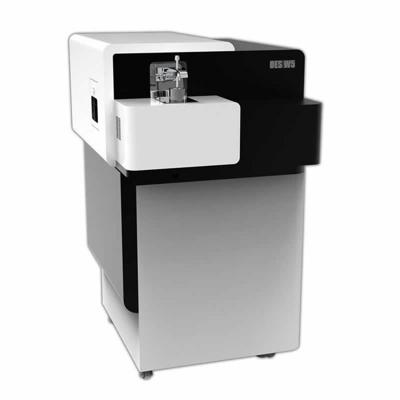
The 4th Generation High Performance Metal Analyzer
CMOS-based, spark discharge, metal detection
Ultra-low limits of detection
High integration, reliability, stability
Lowing operating cost and easy maintenance
Vacuum optical chamber and low argon consumption
Argon jet technology to optimize small sample analysis
Standardized parameter modification
Maximum 30+ elements
High nitrogen (N) analysis 0.03-0.9%
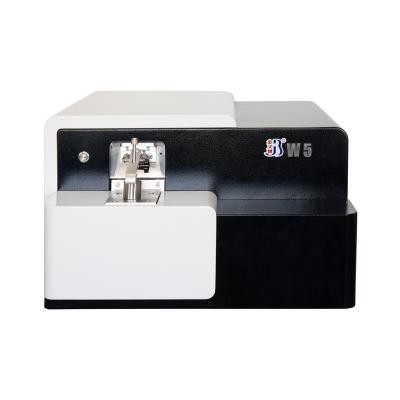
The 4th Generation High Performance Metal Analyzer
CMOS-based, spark discharge, metal detection
Ultra-low limits of detection
High integration, reliability, stability
Lowing operating cost and easy maintenance
Vacuum optical chamber and low argon consumption
Argon jet technology to optimize small sample analysis
Standardized parameter modification
Maximum 30+ elements
High nitrogen (N) analysis 0.03-0.9%
The 4th Generation High Performance Metal Analyzer
CMOS-based, spark discharge, metal detection
Ultra-low limits of detection
High integration, reliability, stability
Lowing operating cost and easy maintenance
Vacuum optical chamber and low argon consumption
Argon jet technology to optimize small sample analysis
Standardized parameter modification
Maximum 30+ elements
High nitrogen (N) analysis 0.03-0.9%
The 4th Generation High Performance Metal Analyzer
CMOS-based, spark discharge, metal detection
Ultra-low limits of detection
High integration, reliability, stability
Lowing operating cost and easy maintenance
Vacuum optical chamber and low argon consumption
Argon jet technology to optimize small sample analysis
Standardized parameter modification
Maximum 30+ elements
High nitrogen (N) analysis 0.03-0.9%
The 4th Generation High Performance Metal Analyzer
CMOS-based, spark discharge, metal detection
Ultra-low limits of detection
High integration, reliability, stability
Lowing operating cost and easy maintenance
Vacuum optical chamber and low argon consumption
Argon jet technology to optimize small sample analysis
Standardized parameter modification
Maximum 30+ elements
High nitrogen (N) analysis 0.03-0.9%
The 4th Generation High Performance Metal Analyzer
CMOS-based, spark discharge, metal detection
Ultra-low limits of detection
High integration, reliability, stability
Lowing operating cost and easy maintenance
Vacuum optical chamber and low argon consumption
Argon jet technology to optimize small sample analysis
Standardized parameter modification
Maximum 30+ elements
High nitrogen (N) analysis 0.03-0.9%
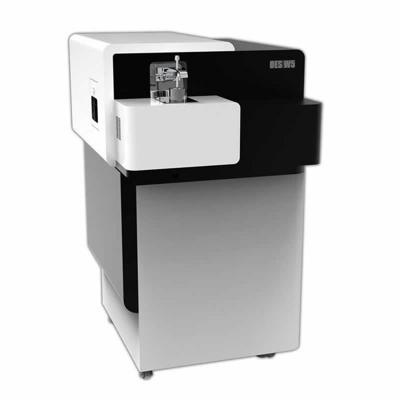
The 4th Generation High Performance Metal Analyzer
CMOS-based, spark discharge, metal detection
Ultra-low limits of detection
High integration, reliability, stability
Lowing operating cost and easy maintenance
Vacuum optical chamber and low argon consumption
Argon jet technology to optimize small sample analysis
Standardized parameter modification
Maximum 30+ elements
High nitrogen (N) analysis 0.03-0.9%
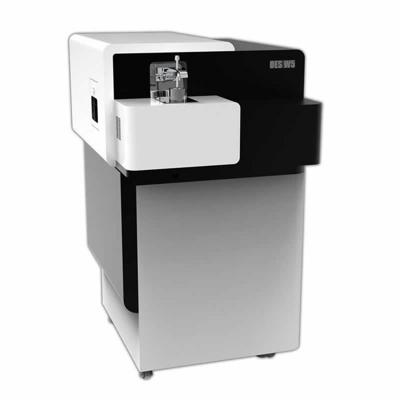
The 4th Generation High Performance Metal Analyzer
CMOS-based, spark discharge, metal detection
Ultra-low limits of detection
High integration, reliability, stability
Lowing operating cost and easy maintenance
Vacuum optical chamber and low argon consumption
Argon jet technology to optimize small sample analysis
Standardized parameter modification
Maximum 30+ elements
High nitrogen (N) analysis 0.03-0.9%

© Copyright © 2026 Wuxi Jinyibo Instrument Technology Co.,Ltd All Rights Reserved.
Sitemap | Xml | Privacy Policy | 苏ICP备18046951号-1