
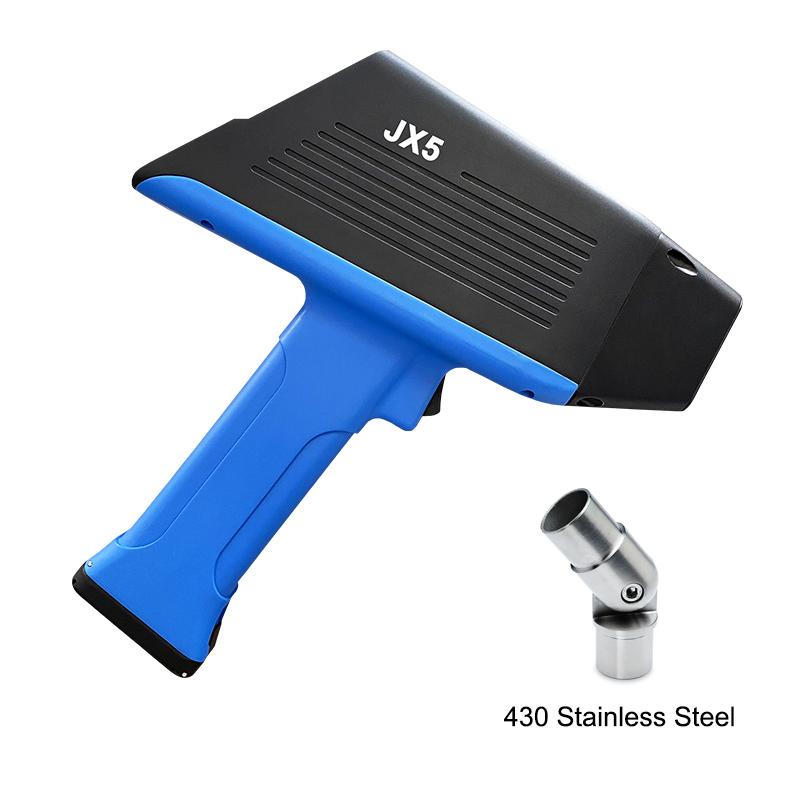
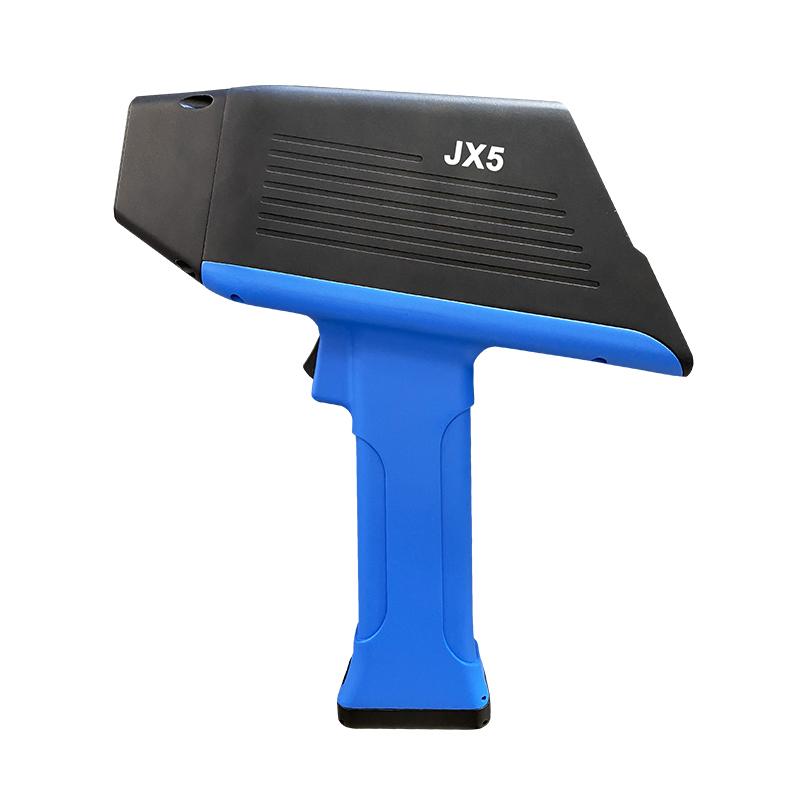
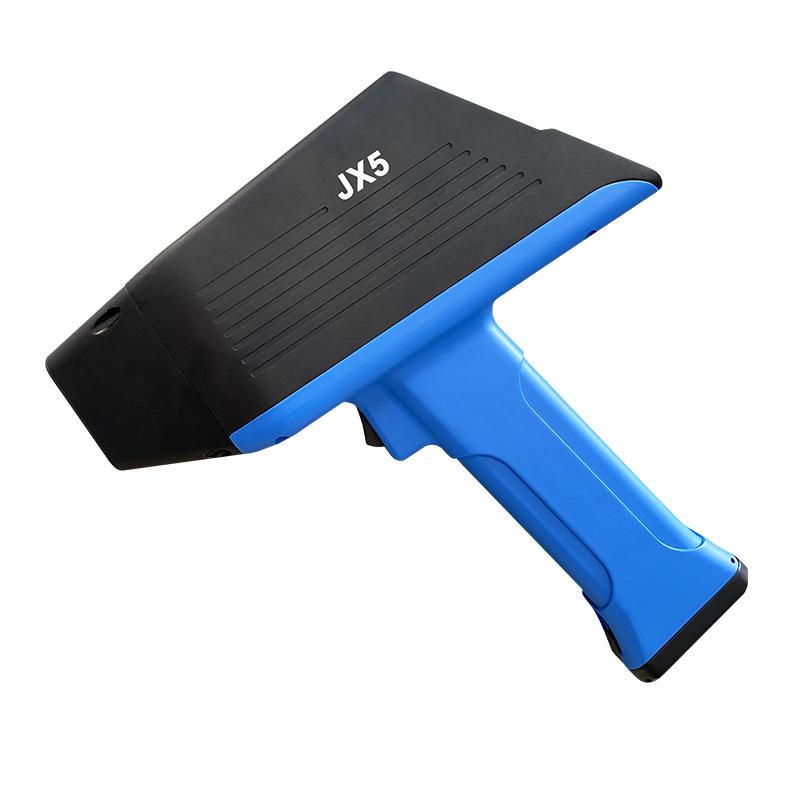
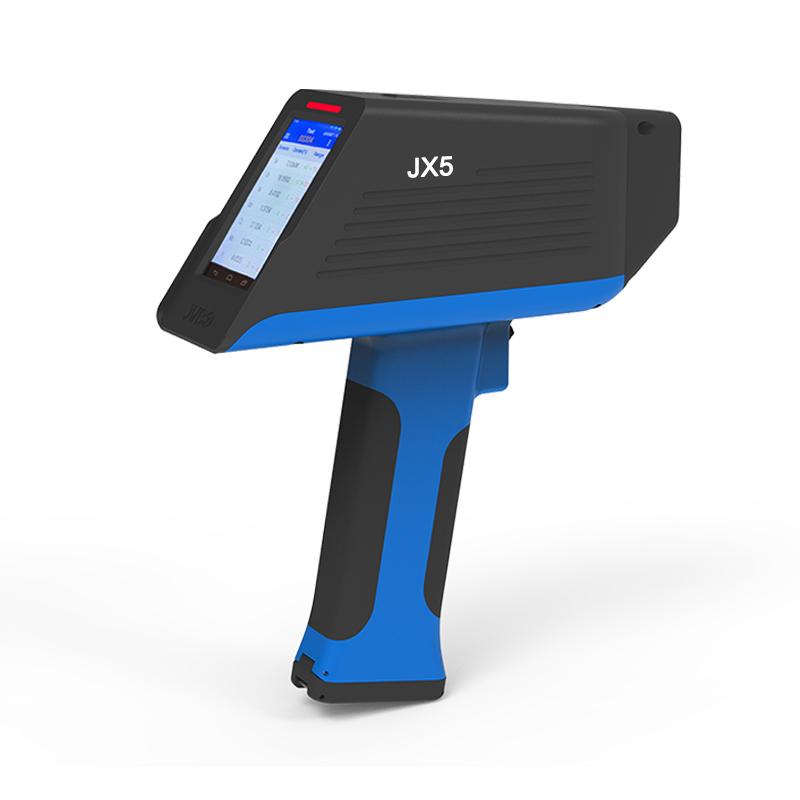
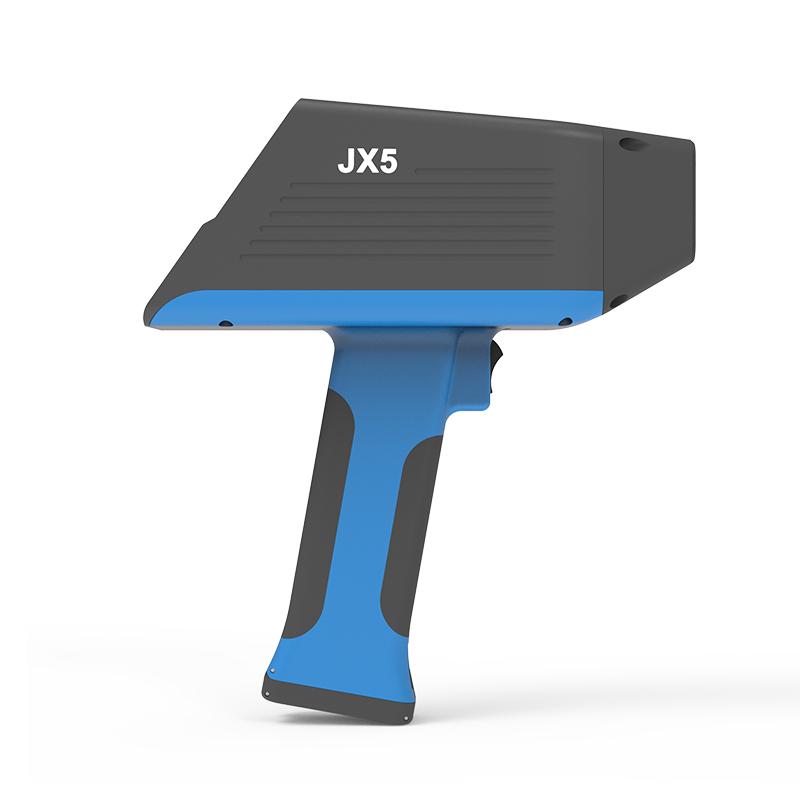
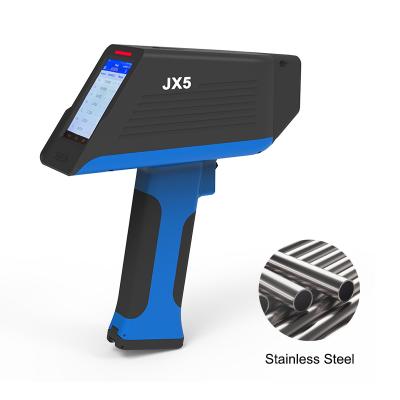
High-Performance Analyzers for 430 Stainless Steel
The fastest handheld XRF analyzer.
Ultimate on-site metal detection capability.
Grade identification in 1 second for any metal.
Full chemistry testing in 3-5 seconds for stainless steel and other alloys.
Full chemistry testing in 7-8 seconds for aluminium alloy.
Everywhere data & documentation.
Description
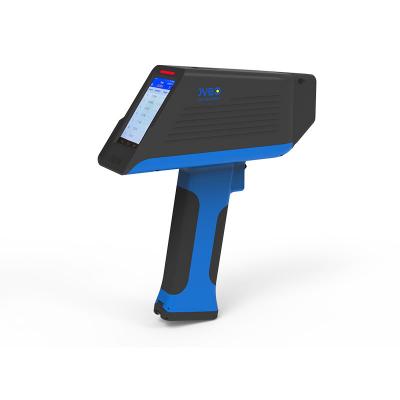
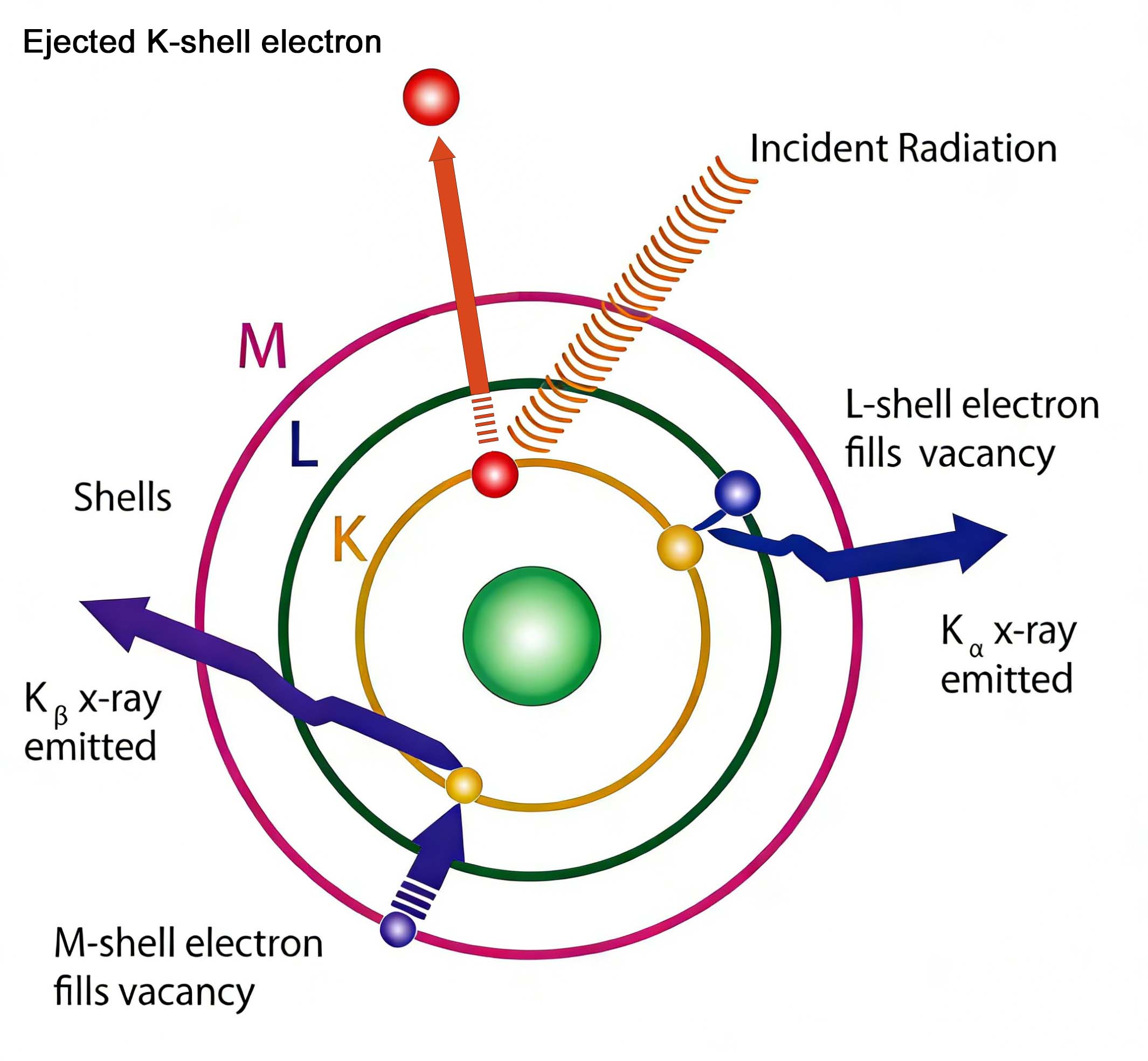
Expert-JX5 handheld XRF spectrometers use X-ray fluorescence technology to analysis the composition of a sample material by measuring the characteristic X-ray energies of the elements in the sample. Different characteristic X-rays of elements are excited when X-rays irradiate the sample. The type and amount of elements in the sample can be determined by detecting the energy and amount of these characteristic X-rays.
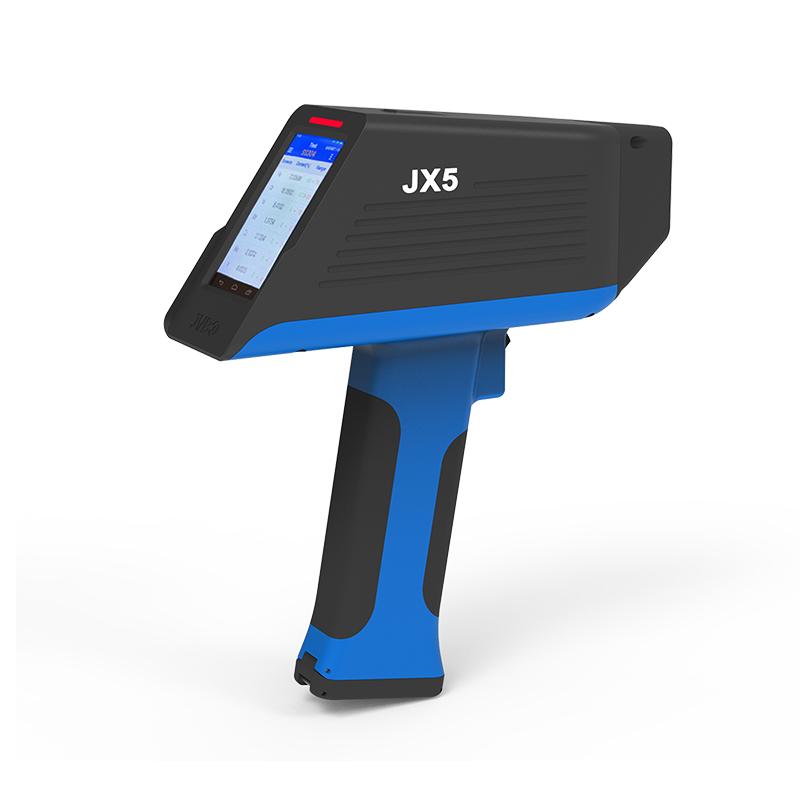
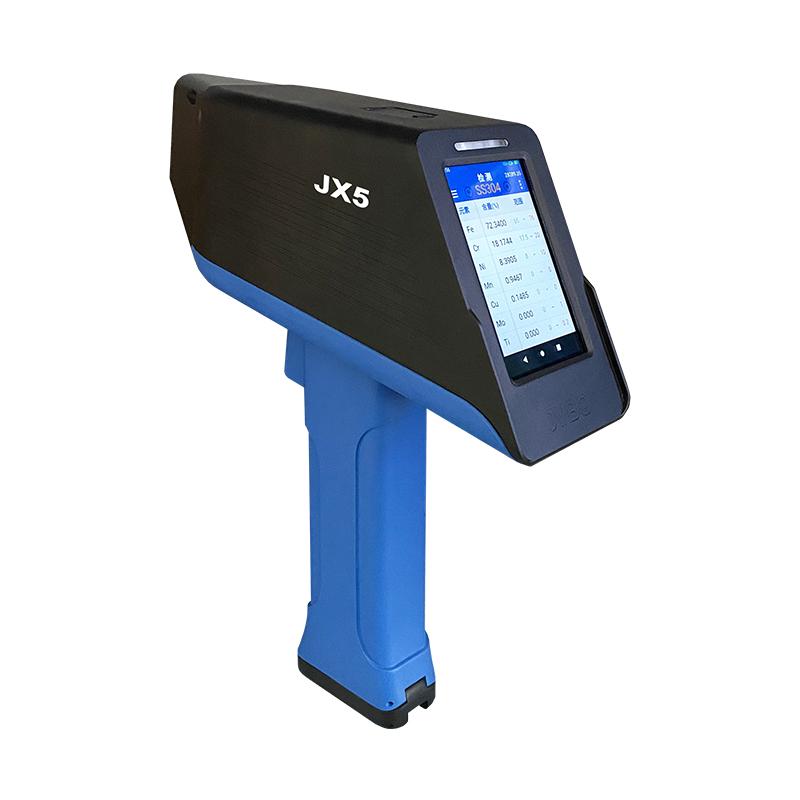
A handheld XRF spectrometer usually consists of an X-ray tube, a detector, a battery, a control circuit, a colour touch screen, and a case. The X-ray tube generates X-rays, the detector detects the energy and amount of characteristic X-rays, the battery provides power, the control circuit controls the whole workflow of the instrument, the colour touch screen sets the parameters and views the analysis results, and the case protects and prevents dust.
Technical Parameter
|
Core technology |
No specific element, automatic peak finding, involved in determining whether to test or not |
|
Algorithm |
FP adaptive algorithm |
|
Dimensions ( L * W * H ) |
250mm*95mm*270mm |
|
Weight |
1.5Kg Battery included |
|
Battery |
14.8V, 3250mAh, 48Wh, 6 hours continuous use |
|
Waterproof |
IP54 water and dust resistant |
|
WIFI |
2.4/5 GHz 802.11n/b/a wireless network |
|
Bluetooth |
Bluetooth 5 Classic, low-power blue tooth |
|
Display |
3.5-inch capacitive touchscreen, 480*800 pixels |
|
Storage |
Internal standard storage 16Gb |
|
X-Ray source |
50Kv, 200uA, 4W all-in-one X-ray generator |
|
Detector |
Si-Pin detector |
|
Resolution |
148ev |
|
Count rate |
50kcps |
|
Test element |
Ca, Ti, V, Cr, Mn, Fe, Co, Ni, Cu, Zn, Zr, Nb, Mo, Ta, W, Au etc (Ca-U) |
|
Single test time |
1 - 90 seconds of customized settings |
|
High precision test mode |
Algorithmic analysis of the average value of several single tests |
|
Alloy matrix |
Iron-based, Copper-based, Titanium-based, Nickel-based...... |
|
Sample type |
Solid Alloy |
|
Detection limit |
Varies according to matrix and element |
|
Database |
Including hundreds of commonly used alloy grades, can be customized to add American Standard, Japanese Standard, German Standard any grade. |
|
Working temperature |
Standard 0~40℃(32~100℉) Recommendation 5~35℃(40~95℉) |
|
Remote mode |
Project the screen display to PC or mobile phone, and trigger the test remotely. |
|
Software |
JINYIBO client software (application update, data download and customized editing of grade library, generation of test report, calibration file editing, etc.) |
|
Security |
Safety interlocks |
|
Warranty |
One-year factory warranty on all parts |
|
Extended warranty service |
Extended warranty available with purchase of extended warranty |
Application
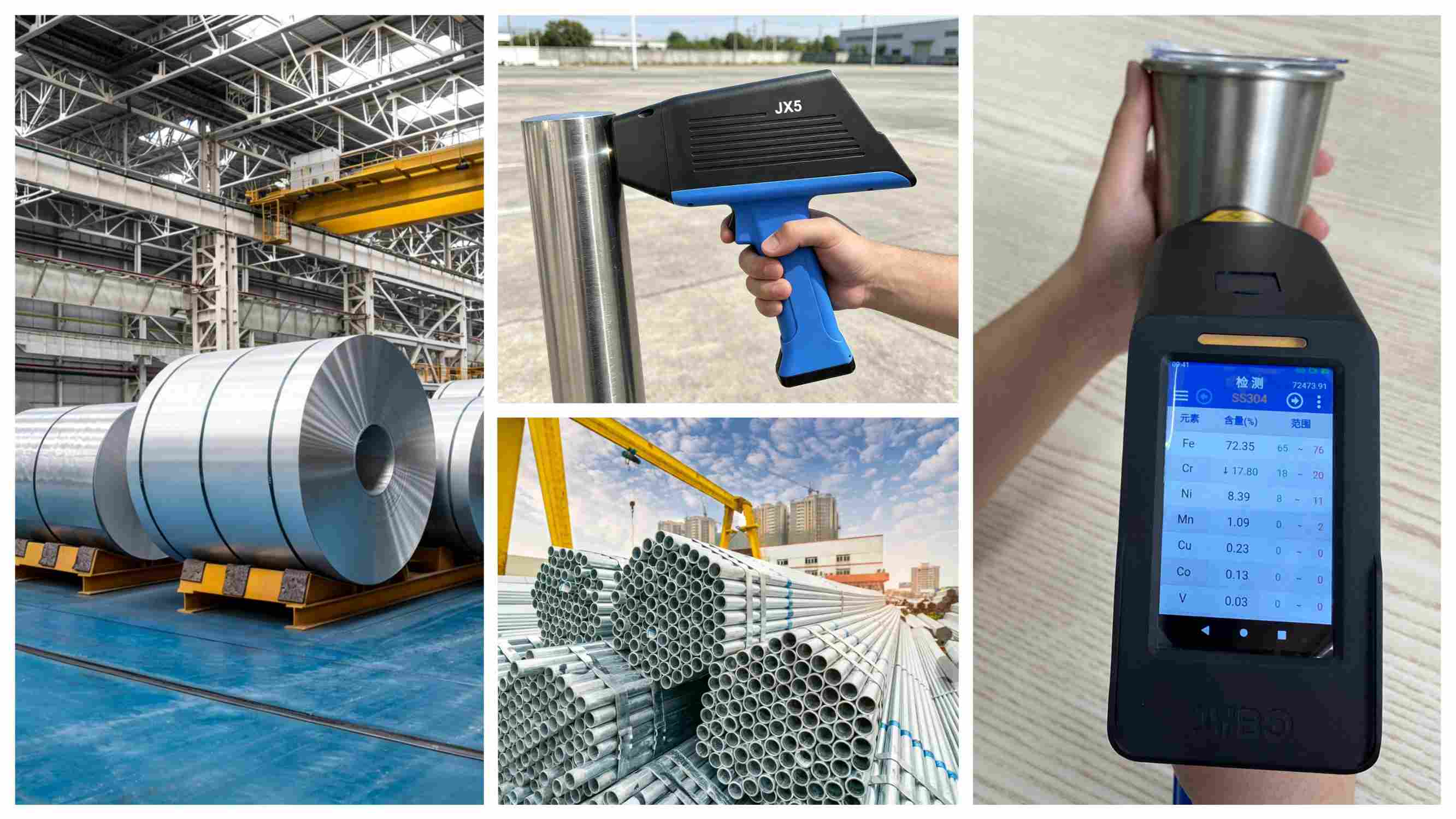
Expert JX5 can accurately detect various stainless steel material and can identify the grade of any metal within 1 second. It can quickly detect aluminum alloy grades, thereby achieving reliable material identification and confirmation (PMI), and accurately controlling material quality.
Application of Handheld XRF in Stainless Steel Analysis
Taking stainless steel as an example, various grades exhibit price differentials due to variances in corrosion resistance and intended applications (refer to Table 1). Among them, grade 201 is cost-effective but demonstrates relatively poor rust resistance; grade 304, commonly referred to as "white iron" in China, boasts the widest application scope and is frequently utilized in general industrial settings, container manufacturing, and furniture decoration; grade 316 offers excellent corrosion resistance but comes at a premium price; grade 430 serves as a lower-priced substitute for grade 304, yet is prone to rusting under prolonged use. Typically, the grade of stainless steel cannot be identified through visual inspection alone. By employing the rapid alloy comparison feature of XRF analyzers, one can expediently verify whether suppliers have delivered the correct materials during incoming goods inspection.
|
Name |
Lead-nickel-manganese stainless steel |
Chromium-nickel stainless steel |
Chromium-nickel stainless steel |
Chromium stainless steel |
|
|
Serial number |
201 |
304 |
316 |
430 |
|
|
Key components (%) |
(Cr) |
16~18% |
18~20% |
16~18% |
16~18% |
|
|
(Ni) |
3.5~5.5% |
8~10.5% |
10~14% |
- |
|
|
(Mn) |
5.5~7.5% |
<2% |
<2% |
<1% |
|
|
(Mo) |
|
|
2~3% |
|
|
Resistance to corrosion |
★★★ |
★★★★★ |
★★★★★ |
★★★ |
|
|
Application |
Medical equipment, piping, high-priced cookware |
Medical equipment, piping, high-priced cookware |
Food industry, seaside equipment and supplies |
Household appliances, doors and windows, beams and columns
|
|
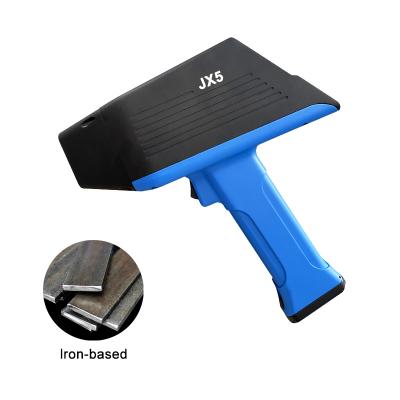
Portable XRF for Alloy
Portable XRF for Alloy
Elements related to alloys/stainless steel, such as Ti, V, Cr, Mn, Fe, Co, Ni, Cu, Zn, Zr, Nb, Mo, Sn, Hf, Ta, W, Pb, Bi, Zr, Cd, Sb, Re, In, Au, Ag, Pt, Pd, Ru, Rh, and Ir.

"Welcome back! In today’s video, we are featuring the Jinyibo Handheld XRF Analyzer paired with its dedicated Desktop Stand with Shield.
While Jinyibo's handheld units offer industry-leading portability for field testing, adding the shielded stand transforms your device into a high-precision, laboratory-grade benchtop system. This setup is essential for professionals in metallurgy and scrap recycling.
In this video, we cover:
Ultimate Safety: How Jinyibo’s lead-lined shield ensures zero radiation exposure from backscatter.
Precision Engineering: Why fixed geometry is the key to Jinyibo's superior quantitative accuracy.
Versatility: Testing small screws safely within the Jinyibo sample chamber.
Hardware Protection: Keeping your Jinyibo detector window safe from punctures and dust.
More information please visit www.jinyibo.com or email us at sales@jinyibo.com
The fastest handheld XRF analyzer.
Grade identification in 1 second for any metal.
Full chemistry testing in 3-5 seconds for stainless steel and other alloys.
Full chemistry testing in 7-8 seconds for aluminium alloy.
High-Performance Analyzers for Precise Material Testing
The fastest handheld XRF analyzer.
Ultimate on-site metal detection capability
Grade identification in 1 second for any metal.
Full chemistry testing in 3-5 seconds for stainless steel and other alloys.
Full chemistry testing in 7-8 seconds for aluminium alloy.
Everywhere data & documentation.
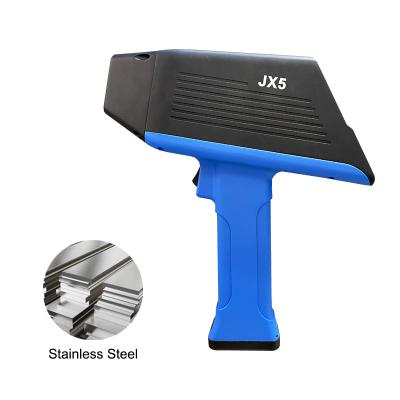
Handheld XRF for On-The-Spot Metal & Alloy Analysis
The fastest handheld XRF analyzer.
Ultimate on-site metal detection capability
Grade identification in 1 second for any metal.
Full chemistry testing in 3-5 seconds for stainless steel and other alloys.
Full chemistry testing in 7-8 seconds for aluminium alloy.
Everywhere data & documentation.
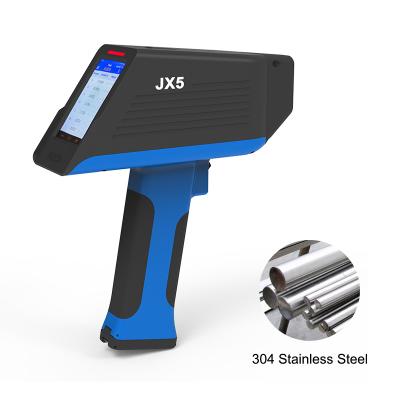
High-Performance Analyzers for Precise Material Testing
The fastest handheld XRF analyzer.
Ultimate on-site metal detection capability
Grade identification in 1 second for any metal.
Full chemistry testing in 3-5 seconds for stainless steel and other alloys.
Full chemistry testing in 7-8 seconds for aluminium alloy.
Everywhere data & documentation.
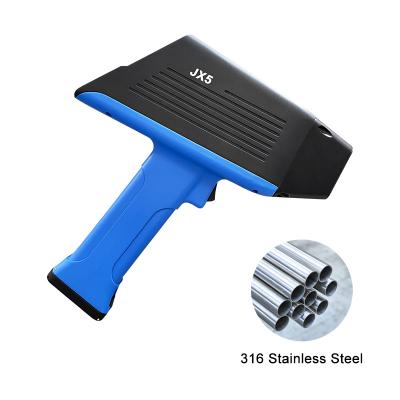
Handheld XRF for On-The-Spot Metal & Alloy Analysis
The fastest handheld XRF analyzer.
Ultimate on-site metal detection capability.
Grade identification in 1 second for any metal.
Full chemistry testing in 3-5 seconds for stainless steel and other alloys.
Full chemistry testing in 7-8 seconds for aluminium alloy.
Everywhere data & documentation.
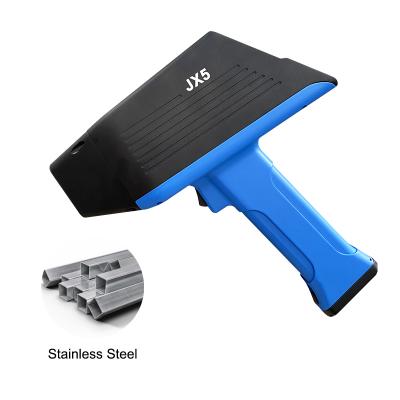
High-Performance Analyzers for Precise Material Testing
The fastest handheld XRF analyzer.
Ultimate on-site metal detection capability.
Grade identification in 1 second for any metal.
Full chemistry testing in 3-5 seconds for stainless steel and other alloys.
Full chemistry testing in 7-8 seconds for aluminium alloy.
Everywhere data & documentation.
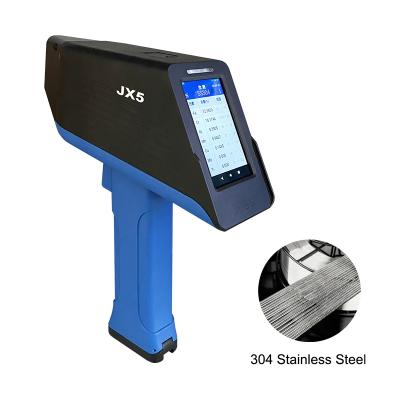
High-Performance Analyzers for 304 Stainless Steel
The fastest handheld XRF analyzer.
Ultimate on-site metal detection capability.
Grade identification in 1 second for any metal.
Full chemistry testing in 3-5 seconds for stainless steel and other alloys.
Full chemistry testing in 7-8 seconds for aluminium alloy.
Everywhere data & documentation.
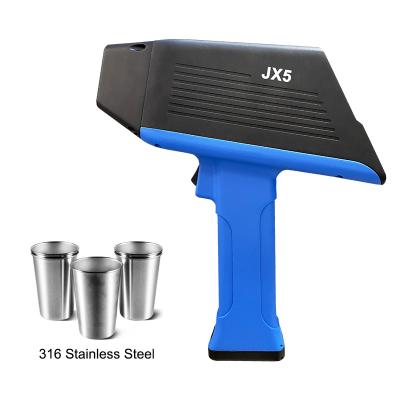
High-Performance Analyzers for 316 Stainless Steel
The fastest handheld XRF analyzer.
Ultimate on-site metal detection capability.
Grade identification in 1 second for any metal.
Full chemistry testing in 3-5 seconds for stainless steel and other alloys.
Full chemistry testing in 7-8 seconds for aluminium alloy.
Everywhere data & documentation.

© Copyright © 2026 Wuxi Jinyibo Instrument Technology Co.,Ltd All Rights Reserved.
Sitemap | Xml | Privacy Policy | 苏ICP备18046951号-1