
Safety Operation and Standardized Use Guide for Optical Emission Spectrometers
Sep 08 , 2026
Abstract: As precision analytical instruments, direct reading optical emission spectrometers (OES) play a critical role in material testing. However, because their operation involves high voltage, high-purity gases, and precise electronic components, improper operation can easily lead to equipment failure or personal injury. To ensure laboratory safety and improve testing efficiency, these safety operation and maintenance guidelines have been formulated.
Before operating the instrument for the first time or performing routine operations, all relevant personnel must strictly adhere to the principle of "understand first, work later":
Read the Manual Thoroughly: Before use, carefully read the relevant operation manuals to fully master operating conditions (such as voltage, frequency, rated output power, and other parameters), installation procedures, test methods, and parameter ranges.
Certified Access System: Operators of this equipment must undergo professional training and assessment. Personnel may operate the instrument independently only after obtaining a qualification certificate.
Professional After-Sales Verification: When putting the instrument into service for the first time, invite the manufacturer’s installation engineer for on-site guidance (or via official video link) to confirm that all wiring and system connections are correct before startup, eliminating equipment damage or personal injury caused by connection errors at the source.
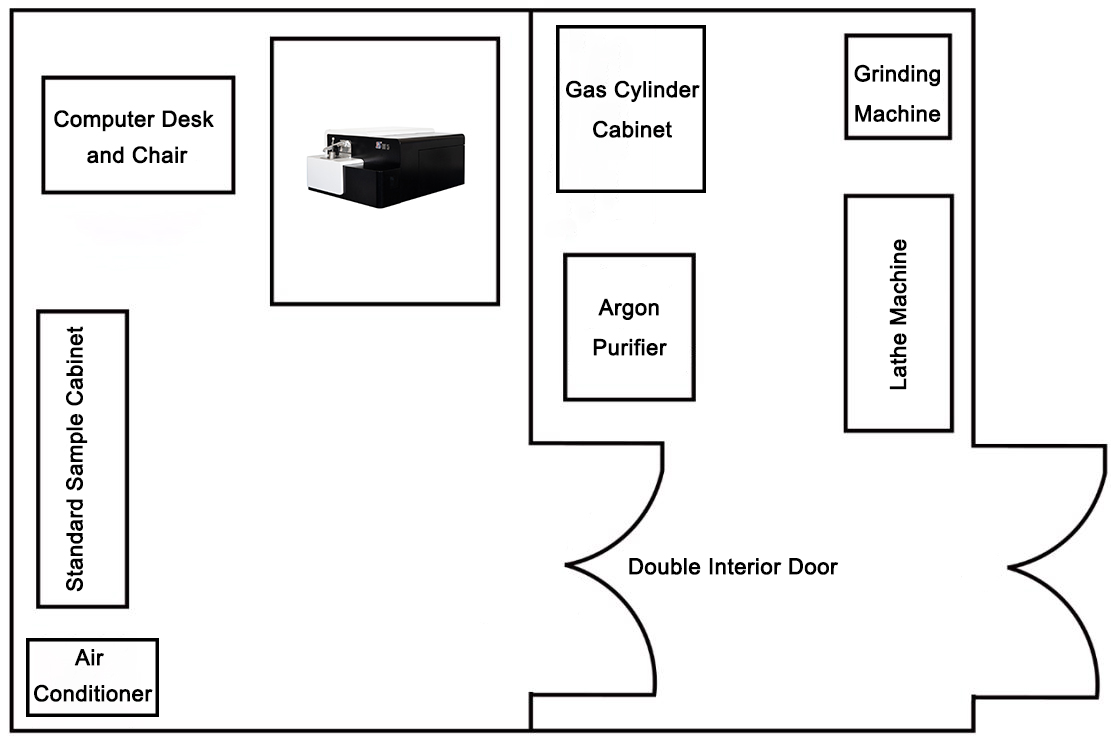
Spectrometers have extremely high requirements for the working environment and power stability, and must strictly follow the principle of "safe grounding and good ventilation":
Space and Heat Dissipation: The instrument should be placed in a spacious area. Blocking the heat dissipation vents with other objects is strictly prohibited to ensure a good ventilation and cooling environment. Meanwhile, avoid stacking multiple instruments or miscellaneous items together to prevent scratching the surface or affecting heat dissipation.
True Grounding Protection: The electrical components of the instrument must have complete ground protection. The external power supply must be connected to a true and effective ground wire. The ground wire should be securely installed at the location with a clear grounding mark on the back of the instrument to prevent the enclosure from carrying electricity and harming personnel, or static electricity/surges from damaging the electronic system.
Safety Warning Labels: The instrument enclosure and key components are equipped with obvious electrical safety warning labels, which no one may deface or obstruct.
Spectrometers involve high voltage and special gases during excitation work, which are top priorities for safety protection:
High Voltage Hazard Warning: The instrument contains an internal high-voltage system during operation, with normal operating voltages reaching up to 10,000 V. Therefore, during instrument operation:
Opening the front cover of the instrument is strictly prohibited;
Touching the spark stand and high-voltage module with any part of the body is strictly prohibited;
Clear high-voltage warning signs on the instrument must be observed at all times. Unauthorized contact will cause severe personal injury.
High-Purity Argon Safety: High-purity argon gas is consumed when testing samples. Argon gas cylinders must be fitted with protective safety caps and fixed vertically on dedicated brackets to prevent tipping or impacts. In addition, the laboratory should be ventilated regularly by opening windows, as argon is an asphyxiant gas that can pose a risk of suffocation if it reaches certain concentrations in an enclosed space.
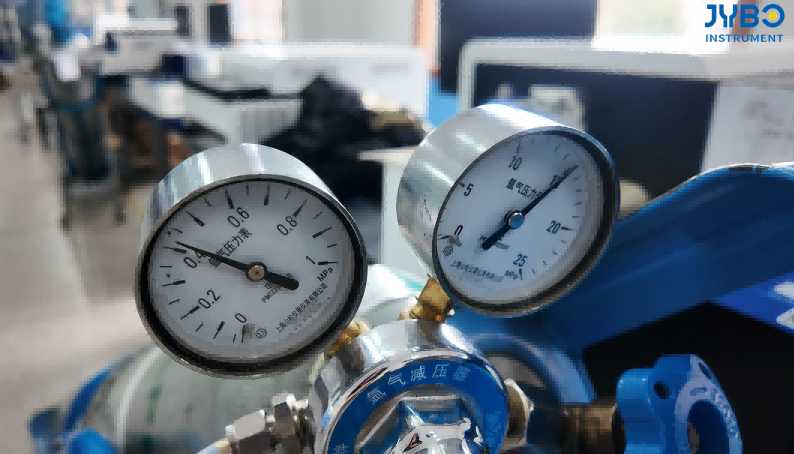
Routine maintenance and troubleshooting must follow scientific and safe procedures:
Power-Off Inspection Principle: The instrument contains high-voltage electrical components, and accidental contact can easily cause electric shock or even threaten life. Therefore, the main power supply must be disconnected before inspecting electrical components or opening the casing for maintenance.
Keep Liquids Away: The use of any liquid or leak-proofing liquid near electrical components and electronic parts is strictly prohibited to prevent short circuits, electrical fires, or electric shocks.
Special Maintenance for Spark Stand: When conducting daily cleaning and maintenance on the spark stand, be sure to turn off the power supply of the excitation light source in advance to ensure it is in a zero-voltage state.
Official Certified Maintenance: Troubleshooting, internal adjustments, and repairs must be performed by the manufacturer's after-sales service engineers or personnel officially certified and qualified by the manufacturer. If unauthorized disassembly or third-party non-compliant repairs result in safety accidents or equipment damage, the manufacturer will bear no legal or financial responsibility.
Strictly abiding by the safety operation procedures for direct reading spectrometers is not only a protection of scientific research assets, but also a responsibility to the life and safety of every laboratory staff member. Laboratory managers and operators must remain highly vigilant and implement safety standards in every single test.
FAQ
Q1: Why is dedicated high-purity argon (≥99.999%) required, and what safety hazards arise from using lower-grade gas or experiencing an argon leak?
A: High-purity argon (99.999%) is essential for OES analysis. Trace impurities including oxygen, water vapor and hydrocarbons absorb ultraviolet light and destabilize spark plasma. This leads to poor measurement repeatability, drifted spectral intensity readings, and in severe cases element calibration failure. For safety, argon is colorless, odorless and denser than air. If leakage occurs within an unventilated laboratory, argon accumulates near floor level and displaces ambient oxygen, posing invisible simple-asphyxiation risks. Operators shall secure gas cylinders properly, install oxygen-monitoring devices where applicable, and guarantee effective mechanical ventilation.
Please contact us for further inquiries or detailed information!
Tel:+86-183-5283 6805
Email:sales@jinyibo.com
Web:www.jinyibo.com

© Copyright © 2026 Wuxi Jinyibo Instrument Technology Co.,Ltd All Rights Reserved.
Sitemap | Xml | Privacy Policy | 苏ICP备18046951号-1