
Trump's Visit to China Signals Economic and Trade Stabilization, Creating Opportunities for the Casting Industry
May 15 , 2026
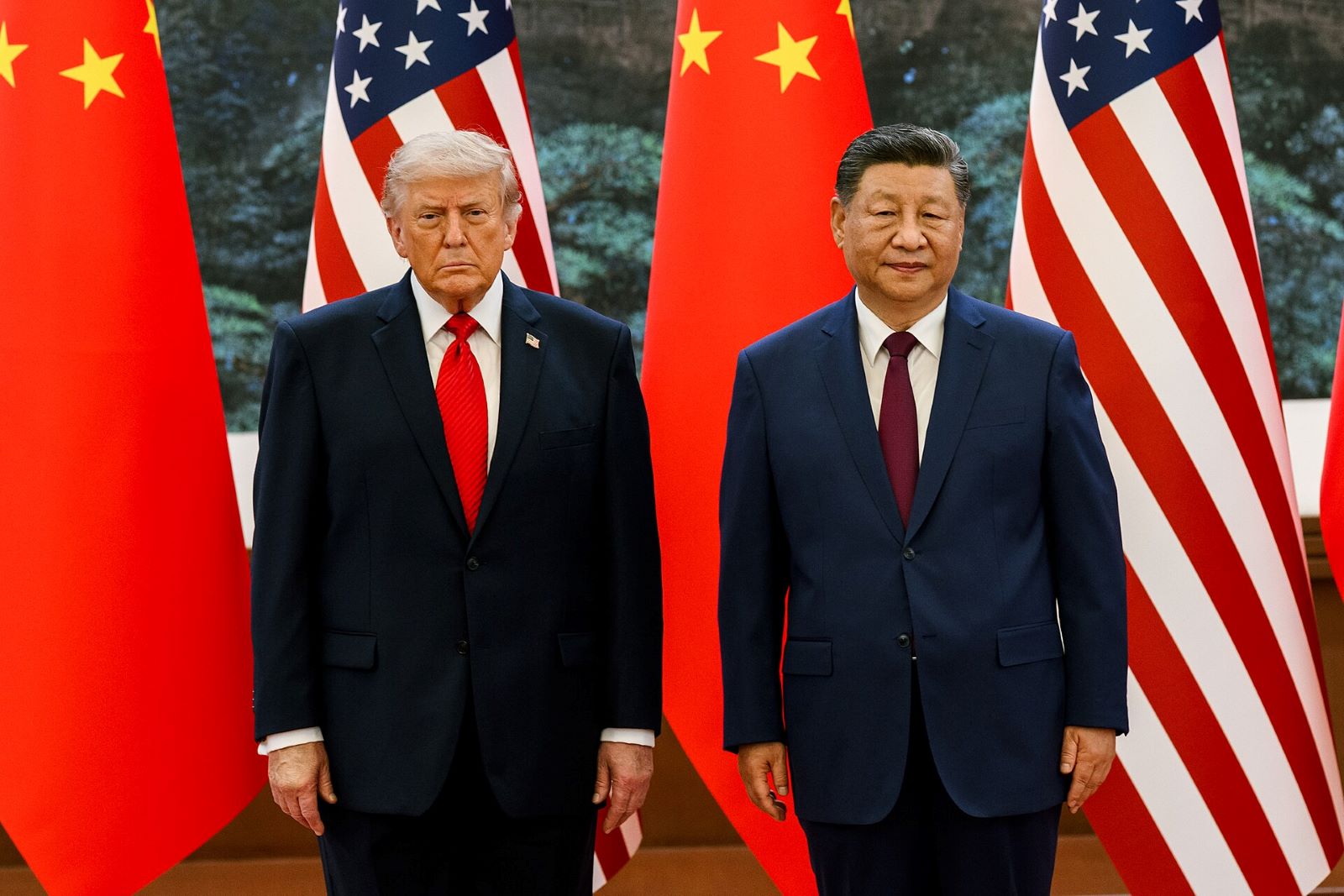
May 13, 2026 – U.S. President Donald Trump begins a state visit to China. The summit focuses on economic and trade cooperation, industrial coordination, and supply chain stability, sending a critical positive signal for U.S.-China manufacturing engagement. As a foundational industry of the national economy, China’s casting sector stands to benefit deeply from an improved bilateral trade environment. Meanwhile, Spectrometer-based inspection—a core technology for quality control in casting—will see accelerated adoption, technological upgrading, and localization. This will empower China’s casting industry to advance toward high-end, intelligent, and green manufacturing.
The Trump administration’s previous high steel and aluminum tariffs significantly restricted China’s casting exports. During this visit, the two countries are expected to reach phased agreements on tariff exemptions and rate reductions for foundational manufacturing sectors such as steel and casting. This will directly lower export costs for Chinese castings (e.g., automotive parts, machinery castings, hardware components).
Leveraging its cost-performance advantage, China’s casting products will become far more competitive in the North American market, driving a recovery in export orders—especially benefiting subsectors like construction machinery and automotive components with high U.S. market dependence.
Since the U.S.-China trade frictions, the global casting supply chain has undergone accelerated restructuring. Chinese enterprises have faced unstable supplies of high-purity pig iron and specialty alloys, as well as price volatility for imported high-end production equipment.
This summit stabilizes bilateral trade relations, helping secure cross-border supply chains:
Raw materials: Easier access to high-end pig iron and alloy additives, with greater cost predictability.
Equipment: Potential partial easing of U.S. export restrictions on advanced manufacturing equipment, enabling Chinese foundries to more easily acquire state-of-the-art melting and forming machinery to bridge gaps in high-end production capacity.
Advancements in high-end casting rely on technological synergy. The U.S. and China each hold strengths in precision casting, specialty alloy casting, and green casting. Trump’s visit will reignite exchanges between manufacturing firms and industry associations from both nations.
Chinese foundries can now more readily:
Adopt advanced U.S. expertise in precision casting design, process optimization, and quality control via technical cooperation, joint R&D, and talent exchange.
Overcome bottlenecks in high-end casting technologies, narrowing gaps in aerospace and premium automotive applications.
Partner on green casting and circular economy initiatives, lowering energy consumption and emissions to align with China’s “Dual Carbon” goals.
An improved external trade environment will also foster more orderly competition in China’s domestic casting market. Long plagued by excess low-end capacity and homogeneous rivalry, the industry will see some low-end output redirected to international markets, easing domestic price wars.
At the same time, alignment with U.S. technical standards and market practices will force domestic foundries to phase out outdated capacity, ramp up investment in intelligent and green upgrades, and shift from scale expansion to quality and efficiency. Industrial concentration is expected to rise.
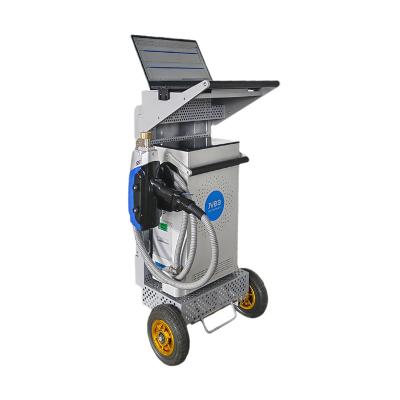
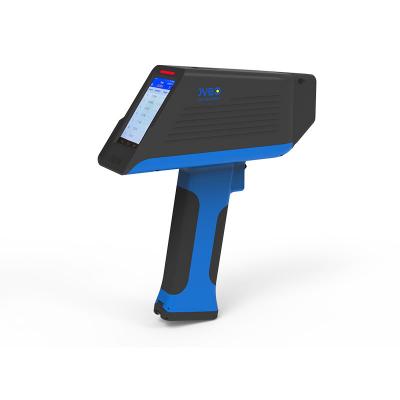
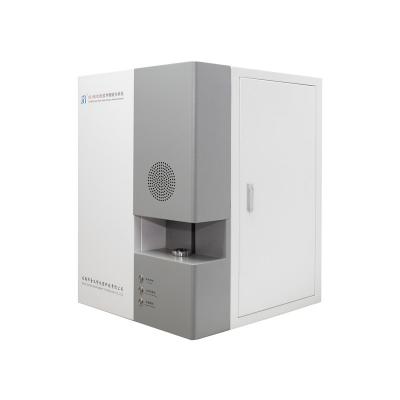
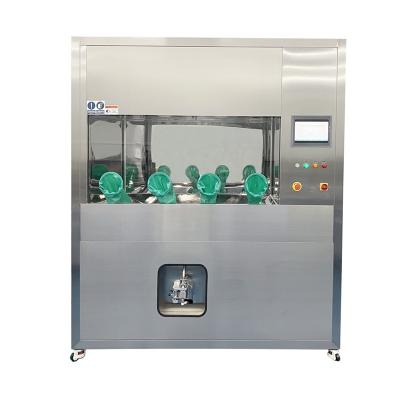
Casting quality directly determines the reliability of downstream equipment. Spectrometers—including X-Ray Fluorescence (XRF), Optical Emission Spectroscopy (OES), and Laser-Induced Breakdown Spectroscopy (LIBS)—are indispensable for composition analysis and quality screening across melting, forming, and final inspection stages.
Melting stage: Rapidly analyze elements (carbon, silicon, manganese, sulfur, phosphorus) in molten iron/steel and alloys to adjust formulations in real time, avoiding scrap from compositional deviations.
Forming stage: Non-destructively detect surface and internal defects (inclusions, porosity, cracks) to reduce defect rates.
Final inspection: Batch-test composition and performance to ensure compliance with international standards (e.g., ISO 16232, VDA 19.1) and customer requirements, facilitating export compliance.
Previously, high tariffs made U.S.-imported premium spectrometers (e.g., handheld XRF,benchtop OES) prohibitively expensive for small and medium-sized foundries. Tariff adjustments now likely to cover high-end testing equipment will cut procurement costs, enabling more SMEs to adopt professional inspection tools in place of manual checks—lifting industry-wide quality control standards.
A rebound in U.S.-China trade and technical exchanges offers valuable learning opportunities for domestic spectrometer manufacturers. While Chinese spectrometers dominate the low-to-mid market, gaps persist in high precision, portability, and in-line monitoring.
Renewed cooperation will help domestic firms:
Master U.S. expertise in spectral analysis algorithms, core component R&D, and equipment stability.
Co-develop casting-specific spectrometers (e.g., high-temperature melt in-line analyzers), accelerating import substitution and reducing industry reliance on foreign equipment.
As bilateral trade normalizes, the U.S. will enforce stricter quality standards for imported castings—particularly for compositional accuracy, defect control, and environmental compliance. As an internationally recognized quality control tool, spectrometer data is globally accredited, serving as a “passport” for Chinese castings to enter global markets.
Foundries will proactively adopt spectrometers to meet export requirements, evolving the technology from an optional add-on to an industry-wide standard, further standardizing quality benchmarks.
China has rolled out policies to advance intelligent inspection equipment, mandating scaled adoption in machinery, automotive, steel, and casting. The opportunities created by Trump’s visit resonate with national strategies, positioning spectrometers as core to smart manufacturing.
Integrated with industrial robotics, IoT, and big data, spectrometers enable closed-loop control in casting: real-time inspection → data transmission → AI analysis → process optimization. This drives digital and intelligent transformation of foundries, boosting productivity and product consistency.
Trump’s visit delivers rare growth opportunities for China’s casting and inspection sectors: near-term relief from trade pressures and expanded market access; long-term impetus for technical upgrading and industrial synergy.
Align with international quality standards and scale investment in spectrometers to solidify quality foundations.
Deepen technical cooperation with U.S. partners to pioneer high-end casting R&D and green production, accelerating industrial transformation.
Leverage U.S.-China technical exchanges to drive core innovation, launching high-precision, cost-effective solutions tailored for casting applications.
Advance import substitution and global expansion, empowering China’s manufacturing ecosystem.
As U.S.-China trade ties deepen, China’s casting industry will escape low-end competition and advance toward high-end, intelligent, and green manufacturing. Spectrometer inspection—central to quality control and technological progress—will grow in strategic importance, propelling China’s transition from a casting powerhouse to a casting leader.
Please contact us for further inquiries or detailed information!
Tel:+86-183-5283 6805
Email:sales@jinyibo.com

© Copyright © 2026 Wuxi Jinyibo Instrument Technology Co.,Ltd All Rights Reserved.
Sitemap | Xml | Privacy Policy | 苏ICP备18046951号-1