
What Are the Common Consumables for High-Frequency Carbon/Sulfur Analyzers?
Jul 06 , 2026What Are the Common Consumables for High-Frequency Carbon/Sulfur Analyzers?
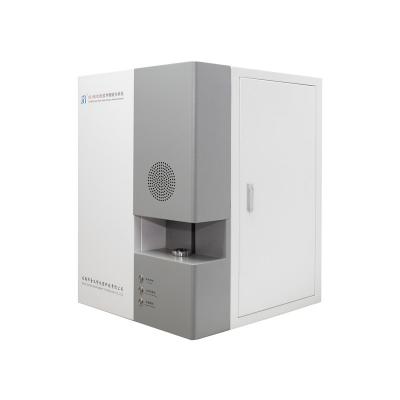
In modern metallurgy, foundries, mechanical manufacturing, and advanced materials R&D, the high-frequency infrared carbon and sulfur analyzer serves as the core quality control standard for foundries, steel mills, and laboratories. The precision of its detection directly determines product compliance. While the optical detection system and the high-frequency induction furnace dictate the core performance, the repeatability of daily testing, laboratory-grade accuracy, and baseline stability depend heavily on the quality and maintenance of consumables.
To help laboratory technicians and procurement managers establish a scientific spare parts management system, minimize baseline drift, and eliminate background interference, we have compiled this professional guide focusing on the "Four Core Consumables" and "Three Maintenance Wear Parts" for carbon and sulfur determinator.
Core consumables are chemical and physical filtration media that are either used in every single test or replaced periodically based on testing frequency. They form the bedrock of daily instrument operation.
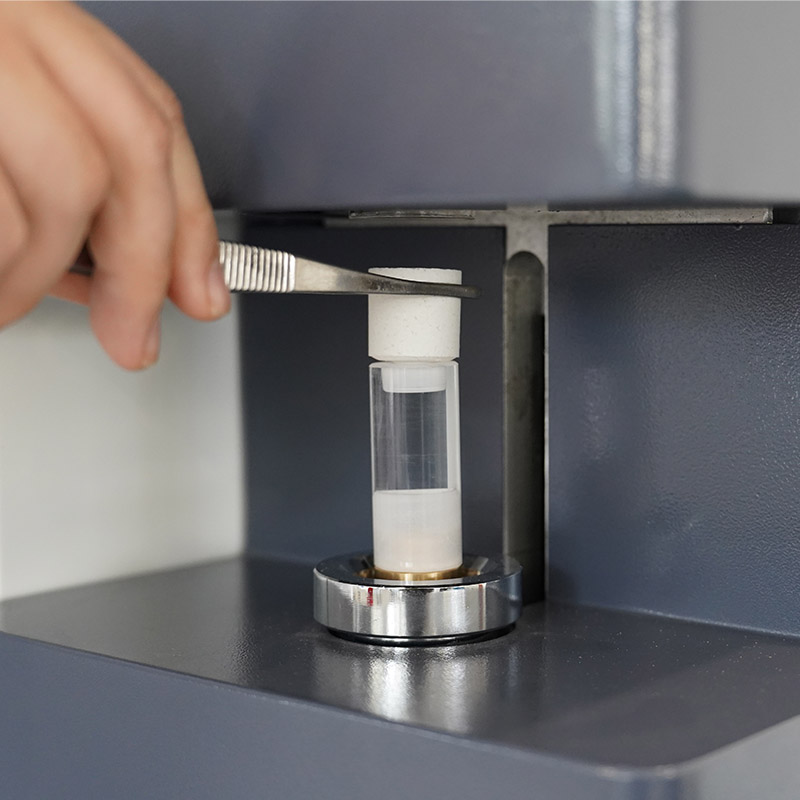
The ceramic crucible is the primary carrier that withstands instantaneous ultra-high temperatures exceeding 1700°C inside the high-frequency induction furnace.
Technical Challenge: Due to manufacturing processes and atmospheric adsorption, raw crucibles naturally contain trace amounts of carbon and sulfur.
Expert Recommendation: When performing low-carbon and low-sulfur analysis (e.g., ultra-low carbon steel, stainless steel), crucibles must be pre-baked in a muffle furnace at 1000°C or higher for 2–4 hours, then cooled and stored in a desiccator. Utilizing high-purity, ultra-low blank value dedicated crucibles is a prerequisite for eliminating background interference.
Many metals, non-metals, and non-ferrous alloys cannot couple directly with the high-frequency induction magnetic field, or fail to burn completely due to their high melting points. In these cases, highly efficient fluxes/accelerators are mandatory.
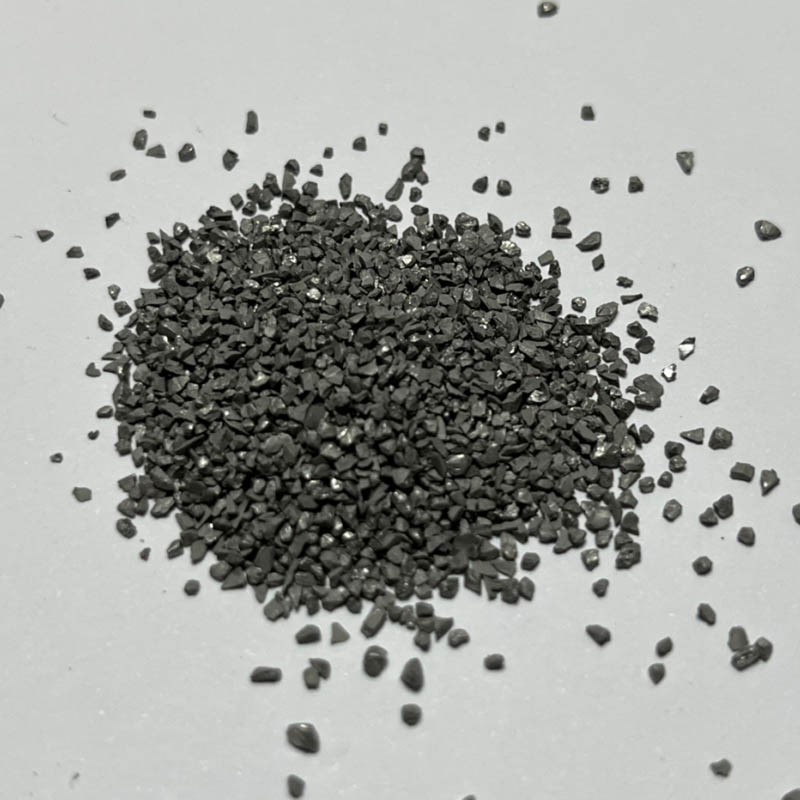
Tungsten Granules (Tungsten Flux): Operating as a premium combustion catalyst, high-purity tungsten granules generate a massive exothermic reaction, rapidly lowering the sample's melting point and ensuring the fast, complete release of CO2and SO2 gases.
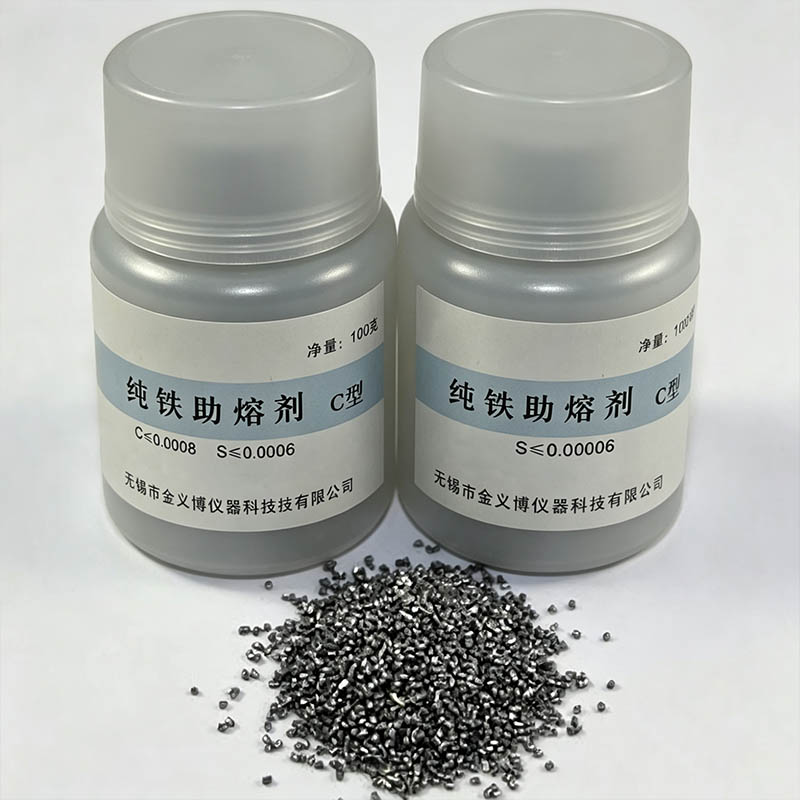
Pure Iron/Copper Chips: Primarily used in conjunction with tungsten granules to enhance the electromagnetic coupling capability of non-magnetic materials (e.g., copper, aluminum, ceramics, ores) and act as a defoamer to prevent molten metal splashing.
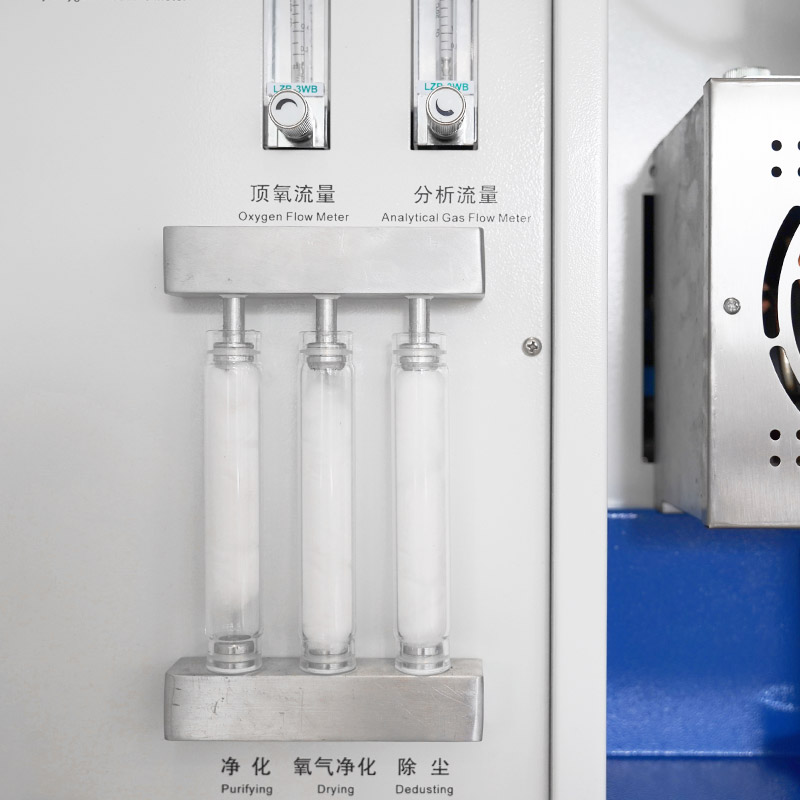
To guarantee that the carrier gas (oxygen) and the analyzed gas entering the infrared detection cell are absolutely pure, a rigorous chemical filtration barrier must be constructed.
Anhydrous Magnesium Perchlorate: An extremely potent desiccant. Because water vapor exhibits intense absorption characteristics in the infrared region, trace moisture can cause severe false-positive errors in carbon and sulfur detection. If the reagent cakes or changes color, it must be replaced immediately.
Ascarite (Sodium Hydroxide on Silicate Carrier): Placed at the oxygen inlet side to thoroughly scrub trace CO2 impurities from the incoming oxygen, thereby securing a stable baseline.
Sample combustion generates a vast amount of metal oxide dust. Ultra-fine fiber dust filter elements and high-efficiency quartz wool are engineered to intercept these micro-particles. They serve as the final line of defense protecting the internal precision gas paths and the infrared detection cell from contamination, preventing signal attenuation caused by optical path fouling.
Beyond the consumables utilized in every test, the mechanical wear components, gas-path seals, and high-temperature protective parts constitute "macro-consumables" that require periodic replacement. Neglecting these wear parts is the root cause of system leaks, underestimated or fluctuating measurement results, and even hardware damage.
Elemental Analyzer C/S utilize precision micro-flow, ultra-low-pressure detection, demanding extreme system airtightness.
Furnace Top Sealing Rings: These components endure mechanical compression from tens of thousands of furnace cycles alongside high-temperature radiation, making them highly susceptible to aging and deformation.
Reagent/Filter Tube O-Rings: Subjected to frictional wear during every chemical reagent replacement. They should be inspected regularly and lubricated with an appropriate amount of vacuum silicone grease. If hardening or cracking is detected, they must be replaced promptly to prevent ambient air from leaking in and introducing carbon contamination.
Quartz Combustion Tubes (Isolation Sleeves): Located inside the high-frequency induction coil, these tubes gradually undergo quartz devitrification, whitening, delamination, or cracking over prolonged exposure to high-temperature combustion and corrosive metal vapors, despite the anti-splashing effects of accelerators. They must be stocked as periodic consumables.
Automatic Cleaning Device Spares (Copper Wire Brushes / Stainless Steel Scrapers): After each analysis, the automatic cleaning mechanism removes splashed dust inside the furnace head. Frequent mechanical friction inevitably wears down the brush head or scraper blade. Regular replacement is required to ensure thorough cleaning and prevent dust from clogging the gas path.
Quartz Crucible Pedestals (Bases): The heat-resistant component that supports and elevates the crucible into the combustion position. Undergoing continuous gravity and thermal shock, it is prone to micro-cracks and is a critical spare part to keep in stock.
Certified Reference Materials (CRMs - Standard Steel/Iron/Fluxes): Although not hardware components in a strict sense, laboratories consume carbon and sulfur standard reference materials across various concentration gradients for daily startup standardization, linearity correction, and routine quality control (QC) checks. They are the "invisible consumables" that maintain the legal validity and traceability of laboratory analytical data.
In high-frequency infrared carbon and sulfur analysis, establishing a comprehensive laboratory spare parts inventory that covers the "Four Core Consumables" and "Three Maintenance Wear Parts"—along with a schedule for periodic replacement—does more than just eliminate systematic errors and guarantee the accuracy and authority of every analytical report. It also significantly extends the lifespan of the high-frequency furnace and infrared cells, ultimately driving down the overall operational and maintenance costs of the laboratory.
Please contact us for further inquiries or detailed information!
Tel:+86-183-5283 6805
Email:sales@jinyibo.com
Web:www.jinyibo.com

© Copyright © 2026 Wuxi Jinyibo Instrument Technology Co.,Ltd All Rights Reserved.
Sitemap | Xml | Privacy Policy | 苏ICP备18046951号-1