201 vs 304 vs 316 vs 430 Stainless Steel: What is the Difference?
Quick Answer
The core difference between stainless steel grades lies in the ratio of metallic elements—specifically Chromium (Cr), Nickel (Ni), Manganese (Mn), and Molybdenum (Mo). This chemical composition directly determines their corrosion resistance and food safety:
Food Cookware & Standard Vacuum Flasks: Choose 304 Stainless Steel. It offers the best price-to-performance ratio and is the standard food-grade material.
Coffee, Tea, & Baby Products: Choose 316 Stainless Steel. It provides superior acid and alkali resistance and is considered a medical-grade material.
Knives, Scissors, & Induction Cookware Bottoms: Choose 430 Stainless Steel. It heats up rapidly, possesses strong magnetism, and is safe for food contact.
Architectural Decoration & Industrial Piping: Choose 201 Stainless Steel. High in manganese and low in nickel, it rusts easily and is strictly unrecommended for food-contact items.
201, 304, 316, and 430 Stainless Steel Core Parameters Comparison
To help you quickly compare, we have summarized the core differences in composition, performance, and pricing among these four mainstream stainless steel grades:
201, 304, 316, and 430 Stainless Steel Core Parameters Comparison
To help you quickly compare, we have summarized the core differences in composition, performance, and pricing among these four mainstream stainless steel grades:
|
Stainless Steel Grade
|
Key Composition Features
|
Corrosion Resistance
|
Magnetic Properties (Magnet Adsorption)
|
Common Application Scenarios
|
Market Price
|
Safety Level
|
|
201
|
High Manganese, Low Nickel
|
Poor (Rusts very easily in humid environments)
|
Non-magnetic or weakly magnetic (Some modified high-Mn steels remain non-magnetic after processing)
|
Architectural decor, window frames, industrial piping
|
Cheap
|
Non-Food Grade (Unrecommended for tableware)
|
|
304
|
18% Cr + 8% Ni
|
Excellent (Rust-proof under conventional environments)
|
Non-magnetic raw material; becomes magnetic after cold working
|
Food tableware, standard thermal mugs, kitchen appliances
|
Moderate
|
Food Grade (SUS 304)
|
|
316
|
18% Cr + 10% Ni + 2% Mo
|
Maximum (Highly resistant to acids, alkalis, and chlorides)
|
Non-magnetic raw material; becomes magnetic after cold working
|
Medical devices, marine facilities, high-end travel mugs
|
Expensive
|
Medical Grade (SUS 316)
|
|
430
|
16-18% Cr, Extremely low Ni (Almost Nickel-free)
|
Fair (Prone to rust in extremely humid environments)
|
Strongly Magnetic
|
Kitchen scissors, induction pot bottoms, washing machine drums
|
Cheap
|
Food-Contact Grade
|
eep Dive: Chemical Composition and Characteristics Analysis
1. 201 Stainless Steel — Industrial Grade with Potential Health Risks
Metallurgical Characteristics: During the production of 201 stainless steel, inexpensive Manganese (Mn) is used to replace costly Nickel (Ni).
Performance Shortcomings: Although it exhibits high hardness, its antioxidant and anti-corrosion capacities are highly limited due to the lack of nickel protection. In acidic, humid, or salt-mist environments, its surface passivation film ruptures easily, leading to extensive rust spots.
Health Hazards: When used long-term in high-temperature or acidic environments, 201 stainless steel is highly prone to leaching heavy metals like manganese, raising risks of migration compliance failure. According to the GB 4806.9-2023 National Food Safety Standard for Food Contact Metal Materials and Products, high-manganese, low-nickel 201 stainless steel possesses poor corrosion resistance and can hardly pass acidic food simulant migration tests. It fails to stably meet the safety requirements for long-term food or beverage storage. Consequently, the industry generally rejects it as a compliant food-contact material, and it is not recommended for manufacturing tableware or food containers.
2. 304 Stainless Steel — The Classic Food-Grade "King of Cost-Effectiveness"
Metallurgical Characteristics: As a standard international austenitic stainless steel, it typically contains 18% Chromium (Cr) and 8% Nickel (Ni). It is widely known in the industry as "18/8 stainless steel".
Performance Advantages: Chromium forms a dense, protective passivation layer on the surface to halt rust, while nickel drastically boosts the material’s ductility and corrosion resistance. It stands as the most extensively utilized and cost-effective stainless steel worldwide.
Typical Applications: The vast majority of household stainless steel appliances (such as electric kettles, pressure cookers, kitchen sinks, cutlery, and food basins) are marked with "SUS 304" and should be prioritized for conventional home scenarios.
3. 316 Stainless Steel — Medical-Grade Material with Superior Acid, Alkali, and Chloride Resistance
Metallurgical Characteristics: Building upon the 304 formula, 316 slightly elevates the nickel proportion and introduces an additional 2% to 3% of the rare metal Molybdenum (Mo), which serves as the core driver for its corrosion resistance upgrade.
Performance Advantages: The inclusion of molybdenum grants 316 an outstanding ability to resist pitting and chloride ion corrosion. Its stability remains remarkably superior when coping with saltwater, seawater, and various organic acids. Even when exposed to harsh chemicals or bleaching agents, it retains high structural stability.
Typical Applications: Historically reserved for cardiac stents, scalpels, chemical pipelines, and marine equipment. Due to consumer upgrades, premium children's thermal flasks and professional coffee travel mugs now explicitly specify 316 (or 316L) stainless steel to prevent erosion from tea stains, caffeine, and fruit acids.
4. 430 Stainless Steel — Ferritic Stainless Steel with Superb Thermal Conductivity for Induction Cooking
Metallurgical Characteristics: Classified as a ferritic stainless steel, 430 contains over 16% chromium, but its nickel content is extremely low (nearly nickel-free).
Performance Advantages: Lacking nickel, its bending strength and resistance to intergranular corrosion are inferior to those of 304. However, owing to its distinct ferritic crystalline structure, 430 exhibits strong ferromagnetic properties and superior thermal conductivity compared to austenitic alternatives.
Typical Applications: Since induction cooktops rely on magnetic field induction to generate heat, the "induction-compatible composite bottoms" of various pots are mostly crafted from 430 stainless steel. Note that because 430 has lower hardenability, it is only utilized in a few budget-friendly, simple scissors; professional kitchen knives generally employ hardenable martensitic stainless steel instead.
Consumer Buying & Pitfall Prevention Guide
Myth Debunked: Does a magnet sticking to a product mean it is bad stainless steel?
False! This is a highly prevalent misconception.
Safe Stainless Steel Can Be Strongly Magnetic: 430 stainless steel is ferritic and highly magnetic; magnets will stick firmly to it, yet it remains a perfectly safe, food-contact-approved material.
Premium Stainless Steel Becomes Magnetic After Processing: Safe 304 and 316 grades are austenitic, meaning they are non-magnetic or weakly magnetic in their raw sheet or coil forms. However, when subjected to cold-working processes such as stamping, deep drawing, or rim rolling (e.g., being shaped into a vacuum flask liner or a cooking pot), their internal crystalline structure undergoes a "strain-induced martensitic transformation", which generates noticeable magnetism.
The Bottom Line: An item attracting a magnet does not indicate inferior quality. Conversely, an item that fails to attract a magnet could easily be industrial-grade 201 stainless steel masquerading as 304. Relying on a magnet to verify the authenticity or quality of stainless steel is completely unscientific in metallurgy.
Scientific 3-Step Verification Method
Check the Stamp: When purchasing, prioritize inspecting the inner wall of the product for official stamps such as "SUS 304", "SUS 316", or localized compliance markings like "Food Contact 304".
Verify Executive Standards: Review the product packaging for regulatory standards. Compliant food-grade stainless steel utensils should align with strict national framework specifications, such as the regional equivalent of the GB 4806.9-2023 food safety standard.
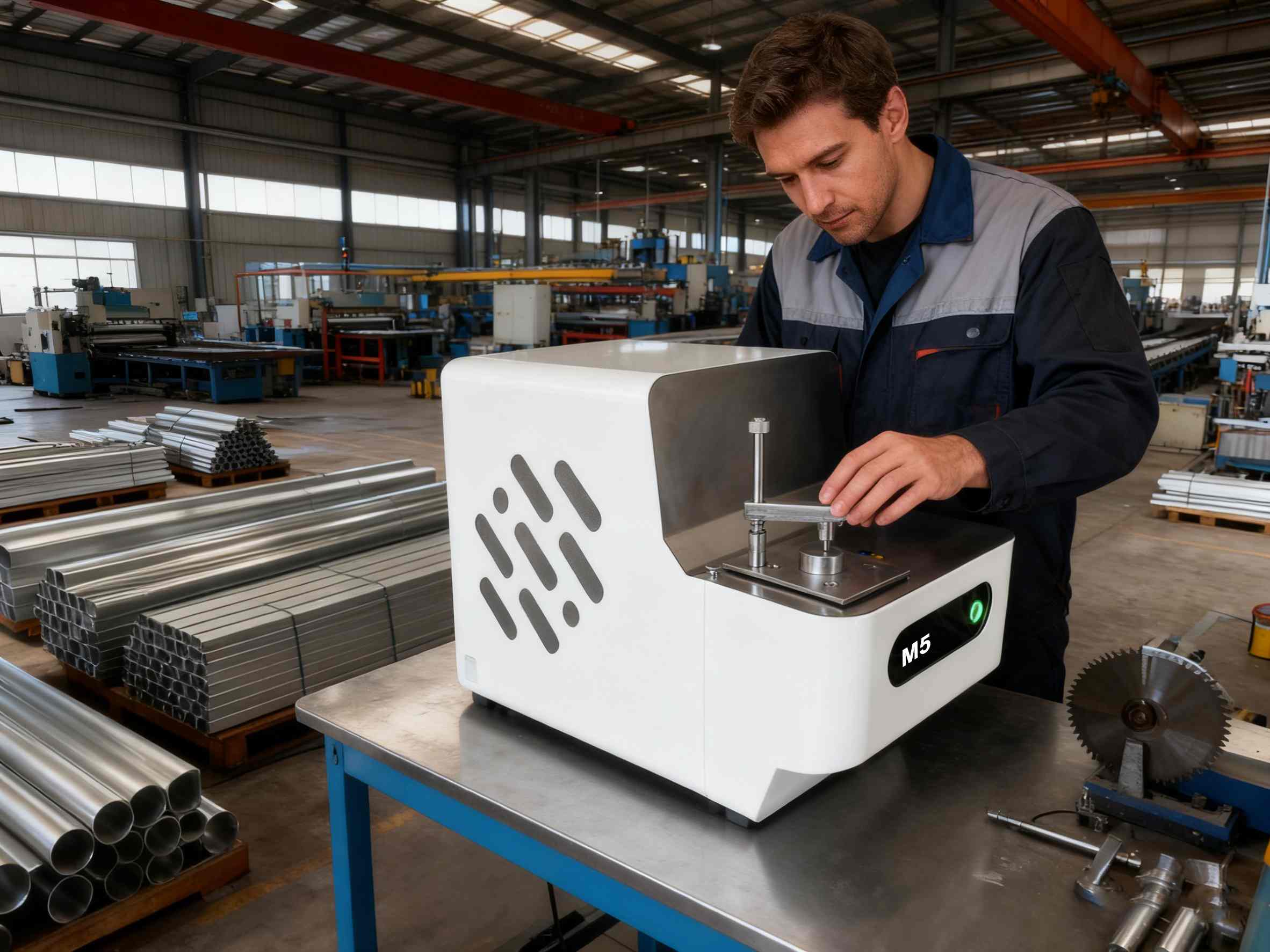
Chemical Reagent Testing (The Most Convenient Screening Tool): If you doubt your household stainless steel items, you can purchase a rapid "stainless steel testing fluid" online. Place a single drop on a clean, grease-free stainless steel surface:
201 Stainless Steel: Turns into a distinct reddish-brown color within seconds.
304 Stainless Steel: Takes several minutes or longer to turn a faint yellow.
316 Stainless Steel: Shows no reaction or discoloration whatsoever.
(⚠️ Note: Testing liquids are corrosive and the tested area must be thoroughly washed afterward. This method acts only as a quick household screening. Standard nickel spot tests can only differentiate 201 from 304/316; identifying 316 requires a specific molybdenum reagent. Furthermore, surface polishing, coatings, or oil residues can cause false readings. Definitive results require laboratory optical emission spectrometry analysis.)
Frequently Asked Questions (FAQ)
Q1: Will holding vinegar, milk, or coffee in a thermal flask corrode the stainless steel?
A: Standard 304 stainless steel is perfectly safe for holding milk or coffee for short intervals. However, if these liquids are left enclosed for extended hours, acidic components or carbonic acids may slightly compromise the surface passivation film. If your daily habit involves brewing tea, storing high-concentration fruit juices, or carrying iced Americanos, 316 stainless steel is strongly recommended. Its molybdenum content provides exceptional resistance, substantially deflecting erosion from fruit juices, coffee, tea, and salt ions, outperforming 304 under prolonged acidic exposure.
Q2: Since 316 stainless steel is so superior, can it completely replace 304?
A: While 316 outperforms 304 in high-salt, high-acid, long-term liquid storage, and marine environments, it is economically unnecessary for every application. For regular water boiling or dry-heating cookware, 304 is fully sufficient. Because 316 incorporates expensive molybdenum and requires complex manufacturing processes, its cost is significantly higher. Purchasing 316 for standard household washbasins or kettles yields minimal added benefit and results in a wasted budget.
Q3: What is the difference between 316 and 316L stainless steel?
A: The letter "L" stands for "Low Carbon." 316L restricts its carbon content to below 0.03%, preventing harmful carbide precipitation during welding. This enhances its intergranular corrosion resistance post-welding, making it indispensable for high-stakes industrial and medical welded components. For typical consumer goods like travel mugs, there is no practical difference in safety or everyday performance between 316 and 316L.
Q4: Why do some 304 stainless steel items develop "rust-like" red spots over time?
A: This is usually not actual rust from the alloy itself, but rather "stray rust" (surface tea/rust staining). Tap water contains minerals, iron ions, and residual salts. When left to dry alongside food residues (like soy sauce or salt), these deposits adhere to the surface and form rust-colored blemishes. These spots can be easily wiped away by soaking the area briefly in warm water mixed with baking powder or white vinegar.
Please contact us for further inquiries or detailed information!
Tel:+86-183-5283 6805
Email:sales@jinyibo.com
Web:www.jinyibo.com