Indonesia FeNi & Stainless Steel Quality Control: How Handheld XRF Analyzers and Spark OES Achieving Perfect Inspection Synergy
Quick Summary
Why should Indonesian FeNi smelting and stainless steel plants combine xrf analyzer with Spark OES?
Complementary Strengths: Handheld XRF excels in non-destructive, rapid screening of heavy metals (Ni, Cr, Mo) at raw material intake.
The Carbon Blind Spot: Due to physics, XRF cannot detect Carbon (C). Accurate grade identification (e.g., 304L vs. 316L) and furnace carbon control strictly require Spark Optical Emission Spectrometers (Spark OES).
The Perfect Synergy: JYBO (Jinyibo Instruments) delivers a seamless dual-layer quality control system by coupling portable XRF efficiency with the W5 Benchtop OES and SP6 Mobile Metal Analyzer(rollable carbon-analyzing spectrometer) to bulletproof your mill's QA/QC pipeline.
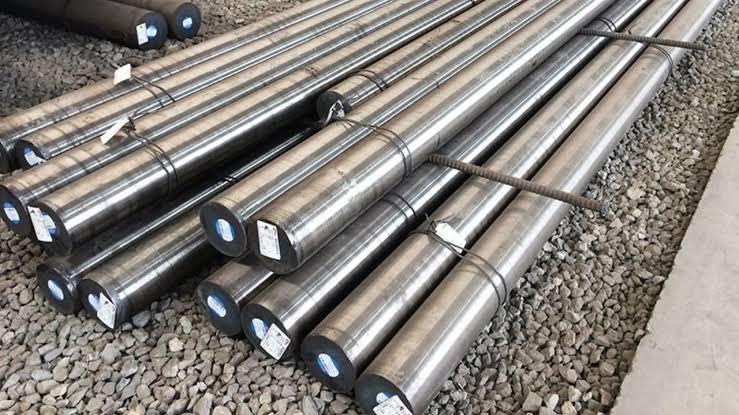
Indonesia has rapidly transformed into the absolute epicenter of global nickel smelting and stainless steel production. Across massive industrial clusters like Morowali and Weda Bay, round-the-clock operations run by industry titans are processing Ferronickel (FeNi) and stainless steel non-stop.
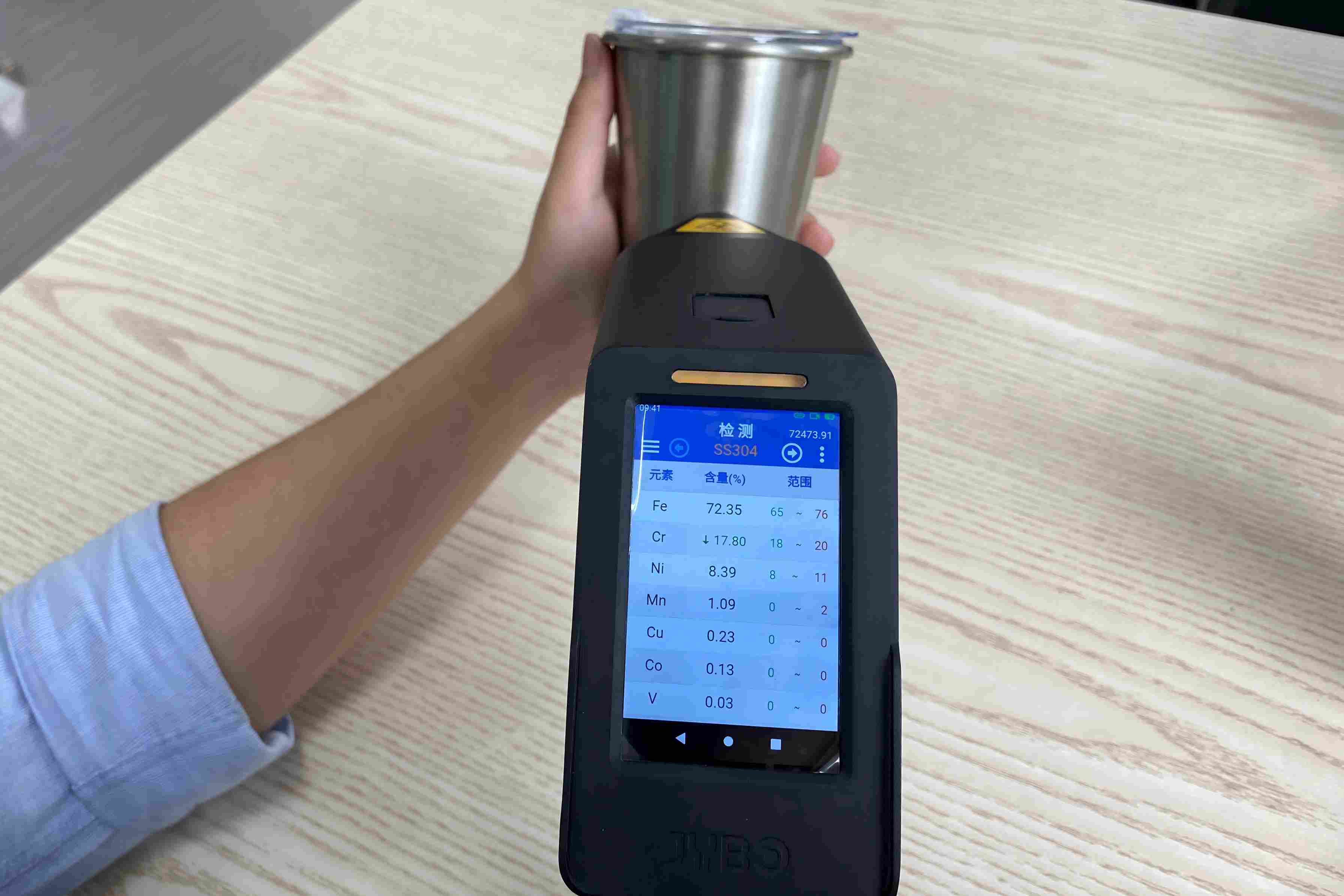
In these high-intensity, 24/7 production environments, Quality Control (QC) and Positive Material Identification (PMI) are the lifeblood of profitability. On the shop floor, Handheld XRF (X-ray Fluorescence) analyzers have become the "first line of defense" for scrap metal sorting, raw material incoming inspection, and large-structure screening, thanks to their lightweight portability and instant, non-destructive results.
However, as international buyers enforce stricter compliance standards for stainless steel grades and FeNi quality, relying solely on a first line of defense introduces significant financial risk. For critical metallurgical checkpoints—specifically furnace carbon control and precise alloy grade verification—the physics-limited XRF spectrometer must be paired with its ultimate counterpart: the Spark Optical Emission Spectrometer (Spark OES).
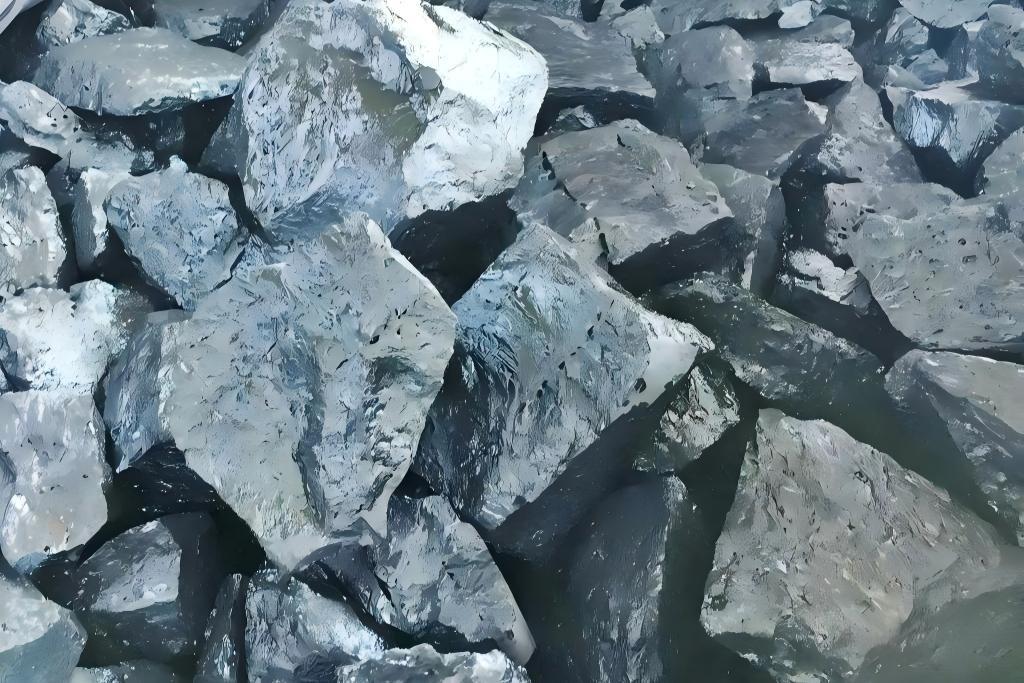
1. The Metallurgical Reality: Why Critical Inspection Nodes Require Optical Emission Spectrometer
While handheld XRF analyzers are exceptionally fast and precise when quantifying heavier alloying elements such as Nickel (Ni), Chromium (Cr), and Molybdenum (Mo), they hit a hard physical limit when it comes to light elements. Due to X-ray physics and detector window constraints, handheld XRF instruments are physically incapable of detecting Carbon (C).
In the Ferronickel and stainless steel production chain, carbon is the single most critical element governing mechanical strength and corrosion resistance:
In Precision Grade Verification: Without carbon analysis, a mill cannot reliably differentiate standard grades from their ultra-low carbon equivalents on the shop floor (e.g., distinguishing 304 from 304L, or 316 from 316L, where the carbon threshold must strictly fall below 0.03%).
In Ferronickel (FeNi) Smelting: Real-time carbon control right before tapping directly impacts deoxidization efficiency, slag separation, and melt purity.
For these sensitive process nodes where a minor carbon deviation can ruin an entire heat, deploying a Spark OES is mandatory. Utilizing arc/spark spark-gap excitation, metal analyzer accurately quantifies Carbon (C), Sulfur (S), Phosphorus (P), and Nitrogen (N) down to ppm levels within seconds, perfectly offsetting the limitations of XRF.
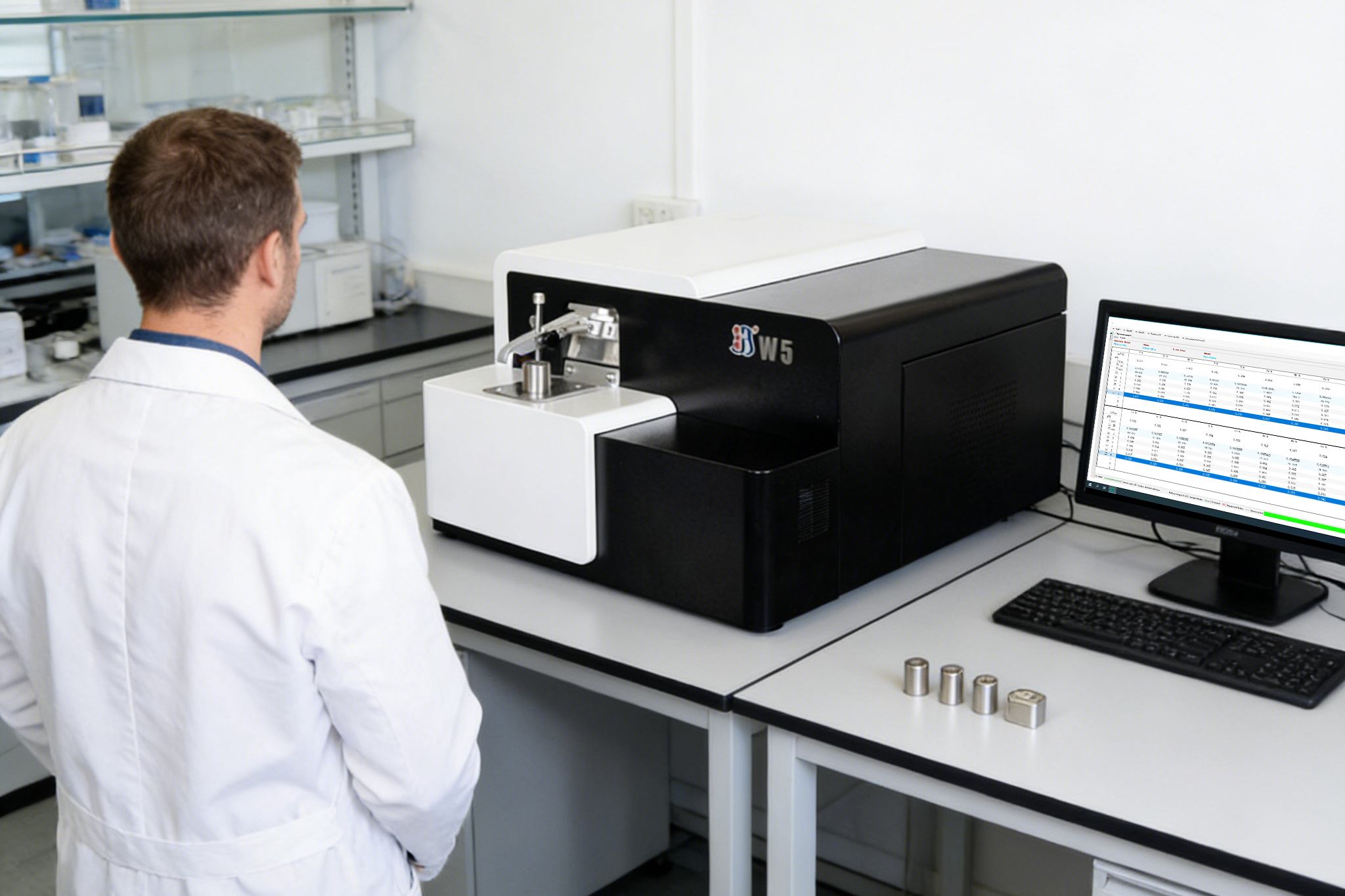
2. Technical Capabilities of Spark OES: Laboratory-Grade Precision & Full-Spectrum Analysis
Compared to portable screening tools, benchtop and mobile Spark OES architectures offer definitive analytical advantages. Drawing from nearly 40 years of specialized R&D in spectroscopy, JYBO has engineered heavy-duty configurations tailored for demanding mill conditions:
Multi-Channel Full-Spectrum Detection
The JYBO W5 Optical Emission Spectrometer utilizes a high-resolution optical system capable of simultaneous, multi-element matrix analysis. It delivers exceptional linearity and accuracy across the board, capturing both trace tramp elements (Pb, As, Sn) and high-concentration alloying elements (Ni, Cr).
Low Detection Limits and Unmatched Repeatability (RSD)
Engineered with a digital, high-energy programmable excitation source and an optimized argon-purged optical chamber, the W5 yields ultra-low Relative Standard Deviation (RSD). For low-carbon (<0.03%) and trace-nitrogen optimization in stainless steel, the W5 generates stable, laboratory-grade quantification that handheld devices simply cannot match.
Uncompromised Field Mobile Alternative: JYBO SP6 Mobile Metal Analyzer
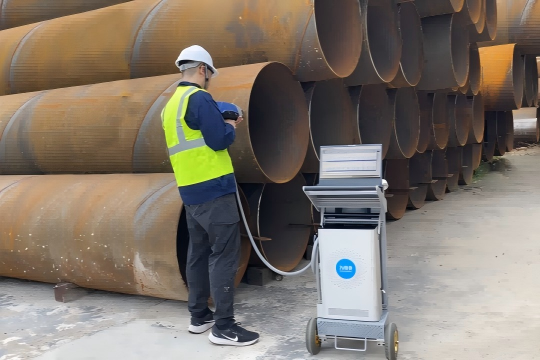
When material verification transitions out of the lab into stockyards, warehouses, or shipping docks, mills do not have to compromise on carbon analysis. The JYBO SP6 Mobile Metal Analyzer is a heavy-duty, rollable cart-mounted OES. It retains the benchtop precision needed for carbon testing while providing complete field mobility via a flexible, long-reach spark probe.
3. Application Synergy Matrix: Handheld XRF Spectrometer vs. Spark OES
Rather than competing technologies, leading Indonesian mills treat these instruments as a unified "one-two punch" quality workflow:
|
Inspection Metric/Feature
|
Handheld XRF Analyzer
|
W5 Spark OES/ SP6 Mobile Metal Analyzer
|
Workflow Integration & Synergy
|
|
Core Physical Advantage
|
Completely non-destructive; zero sample prep; ultra-portable.
|
Full-spectrum matrix analysis; excellent light element quantification (C, S, P, N).
|
Optimal Asset Allocation: XRF filters the mass bulk; OES locks down the chemistry.
|
|
Carbon (C) Detection
|
Completely incapable
|
High-precision analysis (down to ppm levels)
|
XRF verifies the alloy base; OES validates the carbon-grade compliance
|
|
Primary Industrial Use Case
|
Scrap sorting; quick inbound material screening; rapid on-site asset triage
|
Furnace melt adjustment; precise alloy grading (L-series stainless); Mill Test Certificate (MTR) validation
|
Dual-Layer Assurance: Inbound screening via XRF; final outbound/furnace sign-off via OES
|
|
Sample Surface Requirement
|
Highly tolerant; allows direct testing on raw surfaces
|
Requires a flat, freshly ground/milled surface to create a spark seal
|
XRF handles rough, as-received materials; OES handles prepared cross-sections for absolute quantitative accuracy
|
4. Dedicated Localization and Support Engineering for Indonesia
Maintaining instrument uptime in tropical smelting environments characterized by high heat, extreme humidity, and ambient dust is challenging. While legacy Western brands offer name recognition, their overseas factory support pipelines often involve long customs delays for components. JYBO eliminates this bottleneck through a direct, localized Indonesian service framework:
On-Site Application Engineers: JYBO maintains responsive technical service teams ready to deploy directly to remote smelting hubs like Morowali and Weda Bay, handling high-precision optical realignments, calibration curves, and emergency troubleshooting right on the factory floor.
Turnkey SOP & Operator Training: Recognizing high workforce turnover and language barriers, JYBO instruments feature an intuitive, "one-button" testing interface. Our local service teams provide comprehensive Standard Operating Procedure (SOP) training, enabling local operators to run reliable analyses with just 1 day of hands-on instruction.
Conclusion
As global B2B metal markets tighten quality tolerances, relying on a single analytical method introduces operational vulnerability. Synergizing the non-destructive speed of Portable XRF Analyzer with the precise carbon-quantifying power of Metal Spectrometer represents the most robust, risk-managed QA/QC strategy for Indonesian exporters. Through a diversified instrument portfolio and localized engineering support, JYBO secures your mill's quality from melt shop to shipping vessel.
Frequently Asked Questions (FAQ)
Q1: If Spark OES is far more accurate, can our mill phase out Handheld XRF entirely?
Ans: No, that is not recommended. Handheld XRF possesses a unique operational advantage: it is completely non-destructive and requires zero sample preparation. It is practically impossible to cut and grind a specimen from every single incoming load of scrap or irregular casting. Handheld XRF allows operators to scan structural steel, pipes, and bulk scrap in seconds without altering the material, making it an indispensable sorting tool before OES validation.
Q2: How should we split the field PMI workload between Handheld XRF and the SP6 Mobile OES?
Ans: Use XRF Analyzer Handheld if your objective is confirming base alloying elements like Nickel (Ni), Chromium (Cr), or Molybdenum (Mo) to verify basic series sorting. However, if the field target requires confirming whether a batch is 304 vs. 304L or 316 vs. 316L—where the low-carbon status is the legal differentiator—or if you must track trace phosphorus and sulfur limits, you must wheel the SP6 Mobile OES out to the site.
Q3: Is Argon gas consumption mandatory for all Spark OES models? Does Handheld XRF need it?
Ans: Yes, all Spark Spectrometer instruments require high-purity Argon gas (typically 99.999%). During spark gap discharge, an argon shield is required to displace atmospheric oxygen and nitrogen, which would otherwise burn the sample or absorb the short-wavelength UV light emitted by Carbon, Sulfur, and Phosphorus. Conversely, Handheld XRF analyzer operates via X-ray fluorescence tube physics and requires zero consumable gases, making it highly economical for rapid, continuous screening.
Please contact us for further inquiries or detailed information!
Tel:+86-183-5283 6805
Email:sales@jinyibo.com
Web:www.jinyibo.com