Application of Optical Emission Spectrometers (Spark OES) in Zinc Alloy Composition Testing and Quality Control
Executive Summary
Core Value: Optical Emission Spectrometry (Spark OES), with its ultra-fast full-element analysis in 15–30 seconds, a repeatability error of ≤0.3%, and trace detection limits as low as 0.0001%, has become the optimal technical means for quality control across the entire zinc alloy smelting and die-casting process.
Key Pain Points Solved: It addresses the industry challenges of traditional chemical analysis methods — long analysis times, environmental pollution, and the inability to identify "intergranular corrosion" hazards (excessive Pb, Cd, Sn impurities) and microscopic compositional segregation.
Full-Chain Coverage: From raw material grade identification and dynamic furnace-side parameter adjustment to multi-point verification of finished products and graded recycling of scrap, it comprehensively ensures that alloys such as Zamak 3 and Zamak 5 comply with international standards including RoHS, REACH, and IATF 16949.
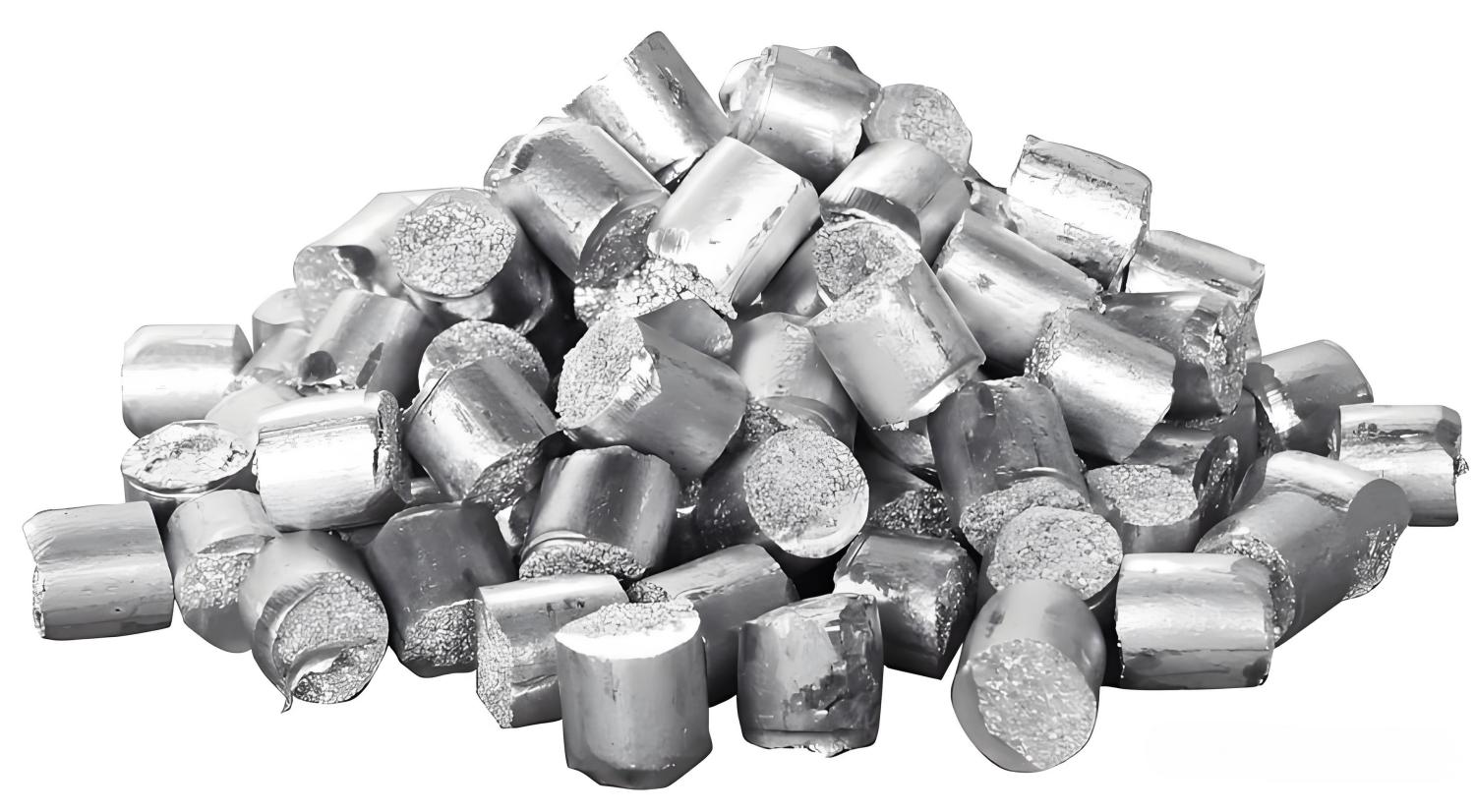
As the global precision die-casting industry and the high-end hardware manufacturing sector continue to upgrade toward refinement, standardization, and intelligence, zinc alloy — as a core industrial structural material offering lightweight, high formability, and high cost-effectiveness — is widely used in automotive components, electrical and electronic parts, sanitary hardware, precision instruments, and new-energy supporting products. The mechanical properties, corrosion resistance, dimensional stability, and surface electroplating suitability of zinc alloy products depend heavily on the dosing accuracy and compositional uniformity of major and minor elements such as aluminum, copper, magnesium, iron, lead, cadmium, and tin. Against the backdrop of increasingly stringent global quality control systems and international environmental regulations, traditional testing methods such as chemical titration and atomic absorption spectrometry suffer from testing lag, cumbersome procedures, significant environmental pollution, and an inability to identify microscopic compositional segregation — shortcomings that make it difficult to meet the full-process quality control needs of modern continuous smelting and batch die-casting production. In this context of industrial technology iteration, Optical Emission Spectrometer — characterized by high precision, simultaneous multi-element analysis, fast response, and traceable data — has progressively become the core technical solution for quantitative zinc alloy composition testing, dynamic furnace-side adjustment, finished-product quality verification, and graded control of recycled materials, providing key technical support for the establishment of a standardized quality control system in the zinc alloy industry.
Quality defects in industrial zinc alloy production predominantly originate from compositional imbalance and compositional segregation during solidification.
Mainstream industrial zinc alloy grades such as Zamak 3, Zamak 5, and ZA-8 have strict elemental composition ranges: aluminum governs the fluidity and formability of the alloy;
Copper enhances wear resistance and structural stability;
Magnesium refines the grain structure and suppresses oxidation;
While excessive trace impurities such as iron, lead, cadmium, and tin can directly cause casting brittleness and cracking, porosity and looseness, electroplating peeling, and reduced corrosion resistance.
They can also render products non-compliant with international standards such as RoHS, REACH, and IATF 16949, triggering batch scrapping and cross-border trade risks. In addition, solute redistribution tends to occur during the cooling of molten zinc alloy, causing enrichment or depletion of elements between the surface layer and the core of castings and forming localized compositional segregation defects. Traditional whole-sample (bulk) sampling testing can only obtain the average composition of a sample and cannot accurately identify compositional differences in micro-regions, leaving a long-standing quality control blind spot that constrains the improvement of the industry's yield rate.
Compared with traditional testing techniques, the principle advantages and industrial adaptability of spark source atomic emission spectrometry are more prominent. This technique uses high-voltage spark discharge as the excitation source to instantaneously excite the surface of a zinc alloy sample that has been machined flat by mechanical cutting and milling, causing the metal atoms on the sample surface to undergo energy level transitions within the high-temperature plasma and emit characteristic emission spectra corresponding to each element. After spectral dispersion and separation by a high-precision grating spectrograph system, the photoelectric detection module accurately collects spectral line intensity signals.
Relying on zinc-alloy-specific matrix calibration curves and matrix effect correction algorithms, it effectively avoids spectral line overlap interference and accurately accomplishes qualitative identification and quantitative calculation of major, minor, and trace impurity elements — fully consistent with domestic and international zinc alloy testing standards such as GB/T 13818-2021, GB/T 26042-2010, and ISO 301. The technique can stably detect more than ten elements in zinc alloys, including Zn, Al, Cu, Mg, Fe, Pb, Cd, Sn, Si, and Ni, covering a detection range of 0.001%–99.99%, with a trace impurity detection limit as low as 0.0001% and a testing repeatability error of ≤0.3%, delivering extremely high detection accuracy and data stability.
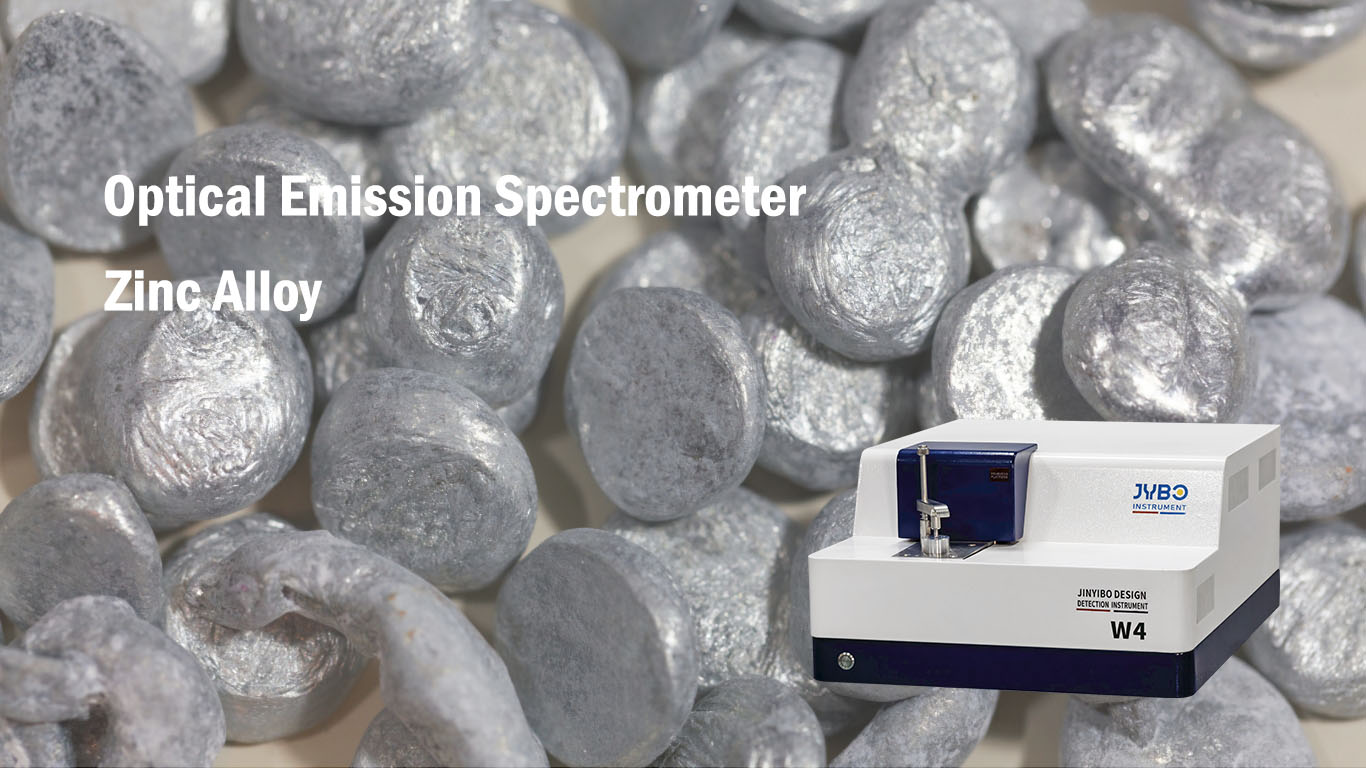
In terms of testing efficiency and process adaptability, Optical Emission Spectrometer(Arc/Spark-OES) technology completely breaks through the efficiency bottleneck of traditional testing modes. The technique requires no complex sample digestion, reagent preparation, or other chemical pretreatment steps; only simple surface cutting with a dedicated lathe or milling machine is needed before measurement. A single sample's simultaneous full-element analysis takes just 15–30 seconds — dozens of times faster than traditional wet chemical analysis — enabling a closed-loop quality control mode of real-time sampling at the smelting furnace, immediate results, and dynamic parameter adjustment, perfectly matching the production rhythm of continuous die-casting lines. Meanwhile, the technique supports multi-point testing and micro-area precision analysis, effectively capturing localized compositional segregation in zinc alloy castings caused by uneven cooling rates or insufficient stirring, solving the industry pain point that traditional homogenized testing cannot cover microscopic defects, and achieving a technological upgrade from "overall average testing" to "full-area precise testing." Furthermore, the testing process consumes no chemical reagents and produces no waste liquid discharge, aligning with industrial green production and ESG sustainable development requirements and adapting to global factory environmental control standards.
Today, atomic emission spectroscopy has been deeply integrated into the full zinc alloy production process, building a whole-chain quality control system covering raw material admission, smelting adjustment, finished-product verification, and recycling and reuse. In raw material quality control, the technique can rapidly identify the material grades of primary zinc ingots and recycled zinc materials, accurately distinguish different series of zinc alloy materials, effectively screen out raw material contamination and composition exceedance issues, and prevent batch quality risks at the source. In the smelting production stage, high-frequency furnace-side sampling and testing monitor the dynamic fluctuations of alloying elements in the molten state in real time; technical personnel can fine-tune charging ratios, melting temperature, and holding time based on precise test data, stabilizing the compositional consistency of products across different heats and batches and greatly reducing melting deviations and product scrap rates. In finished-product quality control, multi-point full-area testing comprehensively verifies the compositional uniformity of die castings, precisely screens out hidden compositional defects, and ensures the performance stability and quality consistency of precision zinc alloy parts. In the field of resource recycling, the technique can rapidly sort mixed waste zinc alloy offcuts and scrapped castings, accurately determine impurity contents and alloy grades, and realize graded and refined utilization of recycled materials, effectively improving the resource utilization rate of recycled zinc alloys and reducing enterprise production costs.
Industrial application data indicate that after large-scale die-casting enterprises introduced spark source atomic emission spectrometry-based quality control systems, the batch non-conformance rate of zinc alloy products decreased significantly and batch quality stability improved markedly, fundamentally reversing the industry's extensive production model that relied on manual experience in melting and post-hoc defect rectification. Compared with testing techniques such as XRF (X-ray fluorescence spectrometry), AAS (atomic absorption spectrometry), and ICP (inductively coupled plasma mass spectrometry), Optical Emission Spectrometer achieves the optimal balance of accuracy, efficiency, cost, and scenario adaptability: it not only satisfies the high-precision trace impurity control requirements of high-end products, but also suits routine, high-throughput batch testing scenarios on the shop floor, making it the most cost-effective and most practically deployable core testing technique in current zinc alloy industrial quality control.
With the in-depth advancement of smart manufacturing and industrial digitalization, spark source atomic emission spectrometry technology continues to iterate and upgrade, integrating digital functions such as big-data traceability, intelligent early warning, automated calibration, and multilingual data output. It can seamlessly interface with industrial management systems such as MES and ERP, achieving real-time archiving of test data, full-process traceability, and intelligent optimization of process parameters, thereby building a digitalized, standardized, and intelligent zinc alloy quality management system. Industry technical research experts point out that the core competitiveness of the global zinc alloy industry has come to center on precise control of material composition and stable quality output. The popularization and application of Optical emission spectrometry has effectively solved long-standing industry problems such as lagging composition testing, missed detection of microscopic defects, and difficult quality traceability. In the future, this technique will continue to empower the process and quality upgrading of the zinc alloy industry, driving the industry's transformation from extensive production toward refined, standardized, and green smart manufacturing, and laying a solid material testing and quality control foundation for the high-quality development of the global precision die-casting industry.
FAQ
Q1: Why is it strictly forbidden to polish zinc alloy samples with sandpaper before direct-reading spectrometer testing?
Answer: Zinc alloys are relatively soft, with a melting point of only 380–420°C. If sandpaper is used to polish the sample: on the one hand, the abrasives in ordinary sandpaper are mostly alumina (Al₂O₃) and silicon carbide (SiC), and these hard abrasive particles can easily become embedded in the soft zinc alloy surface, contaminating the sample and causing falsely high Al and Si results; on the other hand, the localized high temperature generated by grinding friction can cause elemental segregation and migration on the alloy surface and accelerate surface oxidation, altering the true composition of the surface layer. In accordance with common die-casting industry testing specifications, zinc alloy spectrometer samples should preferably be machined by dry cutting with a dedicated sample milling machine or lathe to obtain a flat, inclusion-free, unoxidized fresh metal test surface.
Q2: Compared with handheld XRF (X-ray fluorescence spectrometry), what advantages does a direct-reading spectrometer (Spark-OES) offer in zinc alloy testing?
Answer: The two types of equipment have clearly distinct application scenarios.
1. Light-element analysis and trace impurity quantification capability: Handheld X-ray fluorescence spectrometers exhibit poor quantitative stability for light elements such as Al and Mg; at the same time, their detection limits for trace hazardous impurities such as Pb and Cd are relatively high, making accurate determination of ultra-low contents difficult. Optical Emission Spectrometer (Arc/Spark-OES), by contrast, offers a typical trace detection limit as low as 0.0001% (1 ppm), meeting the high-precision testing requirements for Zamak series zinc alloy grade control and RoHS hazardous substance limits.
2. Effective detection depth and result representativeness: XRF signal collection is confined to the micrometer-range surface layer of the sample and is readily disturbed by oxide skin and surface contamination; OES Analysis relies on high-voltage spark ablation to instantaneously excite the metal sample to a certain depth, effectively avoiding the influence of the shallow oxide layer, so its test results are more representative of the true composition of the zinc alloy matrix.
Supplementary objective note: Handheld XRF features non-destructive testing and portability, making it suitable for rapid preliminary screening of raw materials; Spark OES is a laboratory-based destructive analysis instrument, suitable for production line quality control, finished-product arbitration, and precise grade determination.
Please contact us for further inquiries or detailed information!
Tel:+86-183-5283 6805
Email:sales@jinyibo.com
Web:www.jinyibo.com