
Categories
Latest blog
What Are the Spectrometer Supporting Instruments?
Mar 17 , 2026What Are the Spectrometer Supporting Instruments?
Factors Affecting Spectrometer Testing Result:
When testing samples, the results of a spectrometer are often affected by various factors, including both its own performance and the external environment. External factors mainly include ambient temperature and humidity, the purity of argon gas, the power supply status, and the sample processing condition. There are specialized instruments to address these different influencing factors.
I. Grinding Machine
1. Purpose
The grinding machine is the core equipment for sample pretreatment in metal/ore spectral analysis. Its core function is to remove oxide scale, oil, and burrs from the sample surface, grinding a smooth and clean test surface to ensure sufficient excitation and accurate signal acquisition by the spectrometer, directly affecting the repeatability of the detection.
2. Key Parameters
(1). Abrasive Specifications:
For metal spectral testing, select 80-120 mesh abrasive belts/wheels (too fine abrasive results in low grinding efficiency, too coarse abrasive leaves deep scratches, affecting excitation).
(2) Rotation Speed:
For metal grinding, the rotation speed is 1500-3000 r/min (too low a speed results in uneven grinding, while too high a speed can cause sample surface oxidation, overheating, and deformation); for ore grinding, the rotation speed is 800-1500 r/min to prevent powder splashing and uneven particle size.
(3) Dust Removal Function:
A grinding machine with industrial dust removal is essential to prevent grinding dust from contaminating the sample and clogging the spectrometer's optical path, while also ensuring a safe operating environment.
(4) Clamping Device:
A grinding machine with a fixing clamp reduces human hand-held deviation, ensuring a smooth grinding surface and improving detection repeatability.
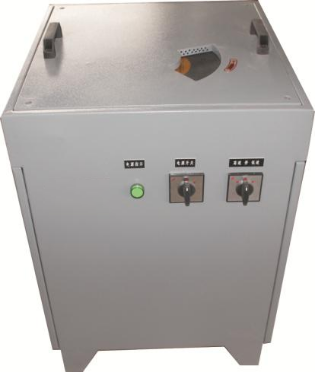
II. Voltage Stabilizer
1. Application
Spectrometers are high-precision optical/electronic devices. Fluctuations in mains voltage and instantaneous surges can directly interfere with the stability of the light source and the signal acquisition of the detector, leading to drift in detection results and poor repeatability. A regulated power supply is an essential environmental protection device. The core function of a regulated power supply for a spectrometer is to stabilize power supply, protect the instrument, and ensure detection accuracy. For high-precision optoelectronic devices like spectrometers, eliminating grid interference at the power supply end prevents deviations in detection results and damage to the instrument.
2. Key Parameters
(1) Rated Power:
Select 1.5-2 times the total power of the spectrometer (there is an instantaneous power peak when the spectrometer's light source/detector starts up). Conventional benchtop spectrometers are mostly 500W-2000W, and a 1000VA-5000VA UPS is sufficient.
(2) Voltage Stability:
≤±1%. The smaller the value, the more stable the power supply, avoiding fluctuations in the light source's intensity.
(3) Output Waveform:
Must be a pure sine wave. Corrected waves/square waves will damage the spectrometer's precision electronic components (such as the CCD detector and data acquisition card).
(4) Additional Functions:
Includes surge protection, overload/short circuit protection, and electromagnetic shielding. For workshop environments, an additional dustproof enclosure is required to prevent dust ingress.
III. Argon Purifier
1. Application:
The argon purifier is a core component of direct-reading spectrometers/spark spectrometers. In industrial metal analysis, argon is used as an excitation protective gas, and its purity directly determines the stability of the excitation arc flame and the quality of spectral lines. The purifier can purify ordinary industrial argon to spectroscopic analytical grade, eliminating detection errors at the gas source.
2. Key Parameters:
(1) Purification Accuracy:
The core requirement is argon outlet purity ≥ 99.999%, oxygen content ≤ 5 ppm, water content ≤ 3 ppm, and nitrogen content ≤ 10 ppm, meeting the high-precision analysis requirements for metals (tin/tungsten/stainless steel, etc.);
(2) Gas Flow Rate:
Selected according to the gas consumption of the spectrometer's spark stand. For conventional benchtop direct-reading spectrometers, select 0.5-5 L/min, which can cover continuous operation of a single instrument;
(3) Working Pressure:
Input pressure 0.2-0.8 MPa, output pressure 0.1-0.5 MPa (adjustable), with pressure display and pressure regulating valve to ensure stable gas path pressure;
(4) Additional Functions:
Prioritize models with impurity over-limit alarm, pressure protection, and regeneration functions. For workshop use, a dustproof shell and shockproof design are required;
(5) Adaptability:
Select a small benchtop purifier for a single spectrometer, a large vertical purifier for multiple instruments, and a mini portable purifier for on-site portable testing.
Please contact us for further inquiries or detailed information!
Tel:+86-183-5283 6805
Email:sales@jinyibo.com

© Copyright © 2026 Wuxi Jinyibo Instrument Technology Co.,Ltd All Rights Reserved.
Sitemap | Xml | Privacy Policy | 苏ICP备18046951号-1