The necessity of wiping the lens of a full-spectrum direct-reading spectrometer with anhydrous ethanol
In the maintenance of full-spectrum direct-reading spectrometers, it is crucial to ensure that the lens surface is free of oil contamination. The presence of oil can interfere with the transmission and detection of light signals in multiple ways, directly compromising the accuracy and stability of analytical results. Operators typically need to wipe the lenses with anhydrous ethanol; its core function is to clean the optical surface and ensure the accuracy and stability of spectral detection.
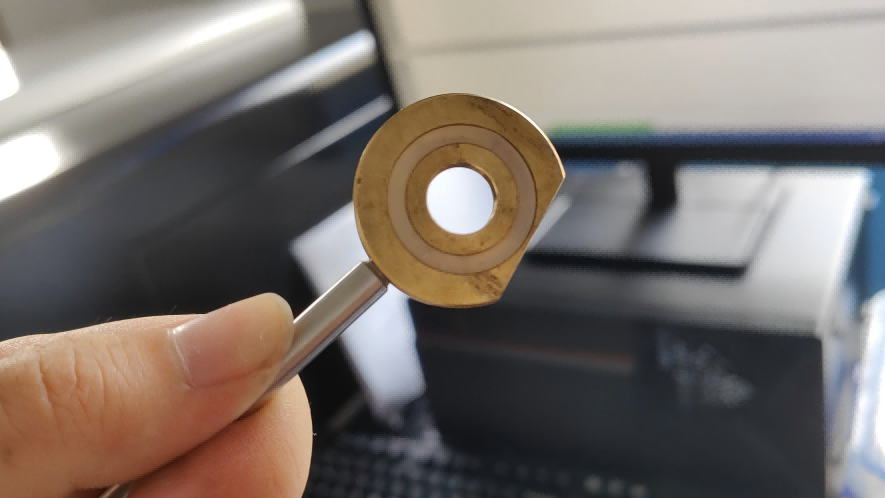
Oil, being an organic adhesive substance, forms a uniform or non-uniform thin film on the lens surface. When the detection light (excitation light or sample emission light) passes through this oil film, some light is absorbed, and the rest is diffusely scattered. This leads to a significant attenuation of the effective light signal intensity reaching the detector, manifesting as a reduction in the peak height of the detected spectral lines, decreased sensitivity, and even the spectral lines of low-abundance elements being directly masked by background noise and unable to be identified.
Uneven thickness of oil film leads to varying absorption and refraction of light at different wavelengths, causing broadening, shifting, and even "shoulder peaks" in spectral lines. Simultaneously, the oil itself may produce weak fluorescence or absorption peaks at specific wavelengths, superimposed on the sample spectral lines, increasing background noise and interfering with qualitative and quantitative spectral analysis, ultimately resulting in biased detection results.
Oil's stickiness further attracts environmental dust, metal particles sputtered from the sample, and other contaminants, forming an "oil sludge" mixture. This mixture is more difficult to clean than simple dust; long-term adhesion corrodes the anti-reflective or reflective coating on the lens surface, causing coating peeling, irreversible degradation of lens transmittance, and significantly shortening lens lifespan.
Oil adhesion is a slow and uneven process; variations in oil thickness at different times and locations lead to inconsistent light transmission efficiency in each detection. This translates to large fluctuations and poor repeatability in the detection results for the same batch of samples, failing to meet the data stability requirements of spectral analysis.
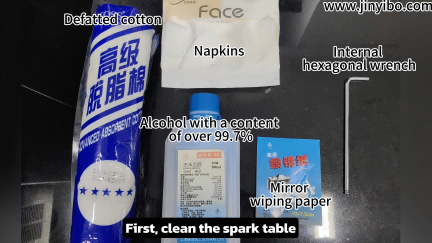
In the maintenance of a full-spectrum direct-reading spectrometer, operators need to wipe the lenses with anhydrous ethanol. The specific functions can be divided into the following three points:
1. Removing contaminants and eliminating optical path interference: The spectrometer lens is the core component for optical signal transmission. After long-term use, dust, metal particles sputtered from the sample, oil, and water stains from condensation accumulate on the lens surface. These impurities absorb, scatter, or reflect incident and emitted light, leading to a weakening of the light signal reaching the detector and an increase in stray light, directly causing deviations in the detection results (such as lower intensity values, peak distortion, and increased background noise). Anhydrous ethanol has excellent solubility, quickly dissolving oil and organic residues. Simultaneously, its extremely fast evaporation rate leaves no water stains or residue on the lens surface after wiping, effectively removing various contaminants and restoring the lens's light transmission performance.
2. Protecting optical coatings and extending lens life: The surface of spectrometer lenses is usually coated with special anti-reflective or reflective films to improve the transmittance or reflectivity of specific wavelengths of light. Wiping with anhydrous ethanol avoids coating corrosion and peeling problems that may occur when using water or other solvents. Simultaneously, the gentle wiping method, combined with lint-free paper/lens cloth, reduces scratches from hard particles on the coating, protecting the lens's optical performance and extending its lifespan.
3. Maintaining detection stability and reducing data fluctuations: The adhesion of contaminants is random and uneven, leading to inconsistent optical path transmission efficiency during each detection, resulting in poor data repeatability and large fluctuations. Regularly cleaning the lens with anhydrous ethanol ensures that the optical path remains in a stable transmission state, allowing the accuracy and repeatability of the detection data to meet the instrument's performance specifications and avoiding misjudgments caused by optical path contamination.
Please contact us for further inquiries or detailed information!
Tel:+86-183-5283 6805
Email:sales@jinyibo.com