What are the differences between an argon gas filling direct reading spectrometer
and a vacuum direct reading spectrometer?
The detection core of an optical emission spectrometer is to generate characteristic spectra by exciting the sample, thereby analyzing elemental composition and content. The gas medium in the excitation environment directly determines the stability of spectral signals and the detection range, which is also the fundamental difference between argon filling and vacuum configuration.
I. Core Principle: The Essential Difference Between Two Excitation Environments
The core logic of the argon-filled direct-reading spectrometer is "inert gas displacement": it fills the excitation chamber with high-purity argon (≥99.999%) to completely replace air (interfering gases such as oxygen and nitrogen). As an inert gas, argon serves two purposes: first, it prevents oxidation of the sample during excitation, reducing interference from oxidation products on spectral signals; second, it acts as a plasma buffer gas, stabilizing the discharge arc and enhancing the intensity and stability of characteristic spectral signals. It is important to note that the excitation chamber is not a vacuum but maintains an argon environment at atmospheric pressure or slightly above.
The vacuum direct-reading spectrometer adopts the concept of "vacuum environment construction": it evacuates the excitation chamber to a low vacuum state (typical vacuum level of 10–100 Pa) using a vacuum pump, directly eliminating the air medium. The core advantage of the vacuum environment lies in significantly reducing the absorption and scattering of light by gas molecules, particularly eliminating interference from gases on the far ultraviolet spectrum—many characteristic spectral lines of light elements are located in this region, which also establishes its unique advantage in light element detection.
II. Key Performance Comparison: Comprehensive Differences from Detection Range to Analysis Efficiency
Based on different principles, the two types of equipment exhibit significant differentiation in core performance metrics, as detailed in the following comparison:
In terms of the detection wavelength range, the argon-filled configuration primarily covers the near-ultraviolet to visible region (approximately 200–800 nm), while the spectral signals in the far-ultraviolet region (<200 nm) are absorbed by argon or residual air, making them ineffective for detection. In contrast, the vacuum configuration enables full spectral coverage of the far-ultraviolet to visible region (approximately 160–800 nm), with no gas interference in the far-ultraviolet region, providing a foundation for light element detection.
The detection capability of light elements is the core difference between the two: the argon-filled configuration exhibits weaker detection sensitivity for light elements such as C, P, S, N, and O, particularly for low-concentration light elements, which are prone to interference and result in insufficient accuracy. In contrast, the vacuum configuration can precisely capture the far-ultraviolet characteristic spectral lines of light elements, offering extremely high sensitivity and accuracy for ultra-low-concentration light elements, making it the preferred choice for light element analysis.
In terms of stability and reproducibility, the performance of the argon-filled configuration depends on the purity of argon and the stability of gas supply. If the argon is impure or the flow rate fluctuates, it will directly affect the test results. In contrast, the vacuum configuration provides a more stable testing environment once the vacuum level is achieved, minimizing external interference and offering superior data reproducibility.
In terms of analysis speed, the argon purging configuration requires a shorter argon displacement time (a few seconds to over ten seconds), with a mature overall process and higher single analysis efficiency. In contrast, the vacuum configuration takes several to dozens of seconds for vacuuming, resulting in a slightly longer single analysis cycle.
III. Scenario Segmentation: Precision Selection Directions for Diverse Needs
The application scenarios and performance advantages of the two types of equipment are deeply intertwined, with the core factors being the type of detection elements, accuracy requirements, analysis efficiency, and budget. They can be specifically categorized into the following two types:
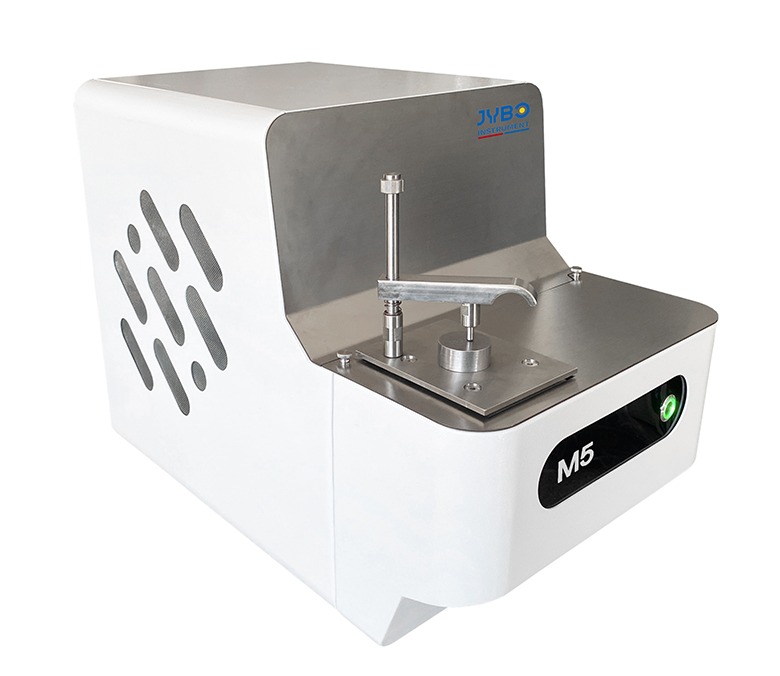
(1) Argon-filled direct-reading spectrometer: A high-cost-performance option for routine testing
The argon-filled configuration is designed with high efficiency and low cost as its core advantages, making it suitable for routine testing scenarios with no strict requirements on light elements. Firstly, it is applicable for the analysis of medium to high-content metal elements in common metallic substrates, such as Fe, Cu, Al, Mg, Si, Mn, Cr, etc., in steel, copper alloys, aluminum alloys, and zinc alloys, meeting basic quality control needs for composition. Secondly, it aligns with the demand for efficient testing in real-time production line monitoring and incoming material inspection, with rapid analysis speed suitable for batch sample processing, ensuring production efficiency. Thirdly, it is ideal for small and medium-sized enterprise laboratories or routine quality control settings with limited budgets and single testing projects, featuring low equipment procurement costs, controllable argon consumables expenses, and only requiring daily checks for gas line sealing, resulting in minimal maintenance difficulty.
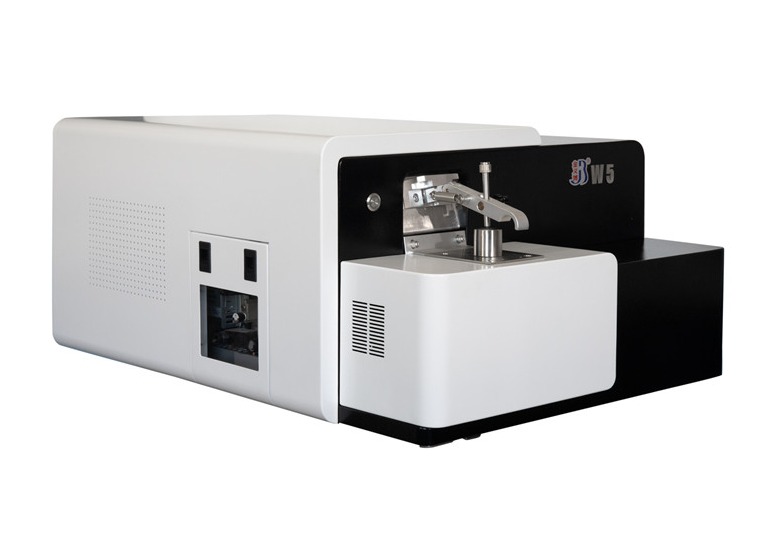
(2) Vacuum Direct Reading Spectrometer: Core Configuration for High-End Precision Testing
The vacuum configuration is designed with high precision and full-spectrum coverage as its core strengths, focusing on high-end applications that demand stringent requirements for light element detection and data accuracy.
First, it is primarily suitable for the detection of ultra-low-content light elements, such as ultra-low sulfur (S≤0.001%) and ultra-low carbon (C≤0.002%) analysis in high-end specialty steels, as well as trace element determination of C, P, N, O, etc., in semiconductor materials, precision alloys, and precious metals.
Second, it is tailored for research institutes and high-end material production enterprises (e.g., aerospace alloys, nuclear power steel) in R&D and quality control tasks, applicable to scenarios requiring extremely high data accuracy, such as standard material certification, new material composition development, and product quality arbitration.
Third, it is ideal for applications requiring full-spectrum elemental analysis, enabling "one-time excitation, full-spectrum detection" while covering both conventional metal elements and light elements, eliminating the need for repeated equipment changes or testing methods. Additionally, for laboratories requiring long-term stable output of precise data and high reproducibility, the stability advantages of the vacuum environment become even more prominent.
IV. Maintenance and Consumables: Differences in Post-Installation Usage Between Two Configurations
Post-maintenance and consumable costs are also crucial factors in the selection process. For the argon gas filling configuration, the core consumable is high-purity argon, which requires regular replacement of argon cylinders. Daily maintenance primarily involves inspecting the gas path's airtightness to prevent air from mixing into the excitation chamber, resulting in lower maintenance costs and simple operations. In contrast, the vacuum pumping configuration does not require argon gas consumables but relies on the vacuum pump as the core maintenance component, necessitating periodic replacement of vacuum pump oil and cleaning of filters. Additionally, strict checks on the vacuum chamber's airtightness are essential to prevent leaks that could affect vacuum levels. Overall, the maintenance costs for the vacuum pumping configuration are higher than those for the argon gas filling setup, and it demands a certain level of expertise from maintenance personnel.
The distinction between argon-filled and vacuum-equipped direct-reading spectrometers is not one of "superiority versus inferiority," but rather a matter of "matching requirements." If the goal is simply to perform rapid detection of conventional metallic elements, prioritize analysis efficiency and cost-effectiveness, and avoid precise measurement of light elements, an argon-filled configuration will suffice. However, if high-precision detection of light elements is required, or if the application involves rigorous quality control in high-end material R&D or quality arbitration—where data reproducibility and full spectral coverage are critical—then a vacuum-equipped configuration is the inevitable choice.
In short, the core of selection lies in clarifying detection requirements—routine testing focuses on efficiency and cost, while high-end testing emphasizes precision and full-spectrum capability. By aligning with your industry scenario and budget, you can achieve precise selection.
Please contact us for further inquiries or detailed information!
Tel:+86-183-5283 6805
Email:sales@jinyibo.com